


Concrete vs asphalt for commercial properties is often framed as a budget question, when in reality, it is often a risk question too. For many Minnesota commercial properties, the right answer is both asphalt and concrete, split by zone. The split is decided by load and liability rather than by price per square foot.
A property does not always have just one surface. For instance, it can have a drive aisle that only ever sees cars and a dumpster pad that a garbage truck wears on. Two different problems. If you pick just one material for all the different surfaces, you risk ending up with surface problems down the line, such as a heaved slab, potholes, and more. This guide views the decision the way a facility director might assess it, zone by zone, against Minnesota winters.
Key Takeaways
- Use concrete in places where weight parks and sits, such as dumpster pads, dock aprons, and walkways. Asphalt sinks under weight that does not move.
- Asphalt is still fine across open parking and drive aisles. Cars driving over a wide area do not damage it, and it goes back into service faster.
- What lies beneath the surface matters more than the surface itself. Minnesota ground freezes about 42 inches deep. Build on a bad base, and either material will fail.
The First Question Most Property Owners Ask Is Often the Wrong One
Upfront installation cost is often times the least useful number in this decision. It is also the first one everybody typically looks at.
When you look at the installation cost, the number just tells you what you pay once. However, it says nothing about the next decade or two, which is how long a commercial surface gets judged over. Two properties can buy identical asphalt and get very different results because one laid it over a solid ground base and the other over wet clay.
Three variables usually decide how the surface material performs:
- Load - What sits on this surface, and does it move or stay put?
- Base condition - What is underneath, and will it hold through a thaw?
- Winter exposure - How much salt, plowing, and standing water does this spot see?
Price is not on that list. Of course, the cost matters, and we will get to it later on. But cost is the result of those three variables. It is not a separate choice.
So, which is better between concrete and asphalt for a commercial parking lot? The honest answer changes depending on which part of the lot you are standing on.
Concrete vs Asphalt for Commercial Properties: What You Are Actually Putting Down
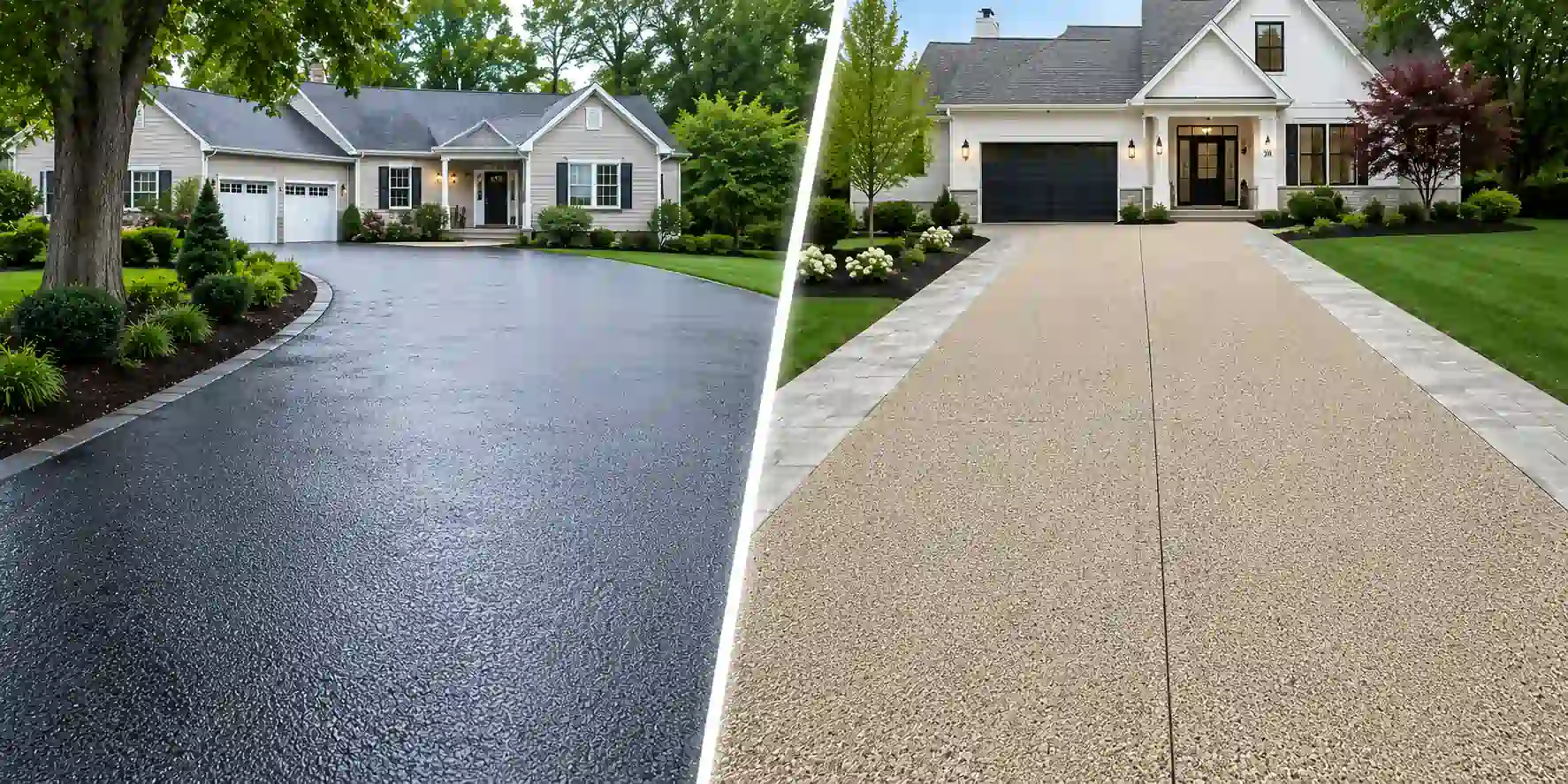
Asphalt bends. Concrete does not. Almost every other difference follows from that.
Asphalt is crushed stone and sand held together with bitumen, which comes from oil. It is laid hot and packed down. The finished surface flexes a little under weight.
Concrete uses the same stone and sand aggregate but a different glue. Cement and water react and harden. The result is a rigid pavement. It does not bend. It sits on top of the ground and spreads weight outward instead of pressing it down.
That difference shows up in four ways:
- Under load: Asphalt pushes the load down into the ground below it. Concrete carries the load and spreads it out.
- When it fails: Asphalt cracks and then breaks apart, which creates a pothole. Concrete cracks along its seams and flakes on top.
- When you repair it: An asphalt patch blends into the surrounding surface. A concrete repair means cutting out a whole section, and you can see where it happened.
- Over bad ground: Asphalt shows every soft spot below it. Concrete can cover a weak spot for years before anyone notices.
How Each Surface Handles a Minnesota Winter
Winter can damage both materials. It just damages them in different places.
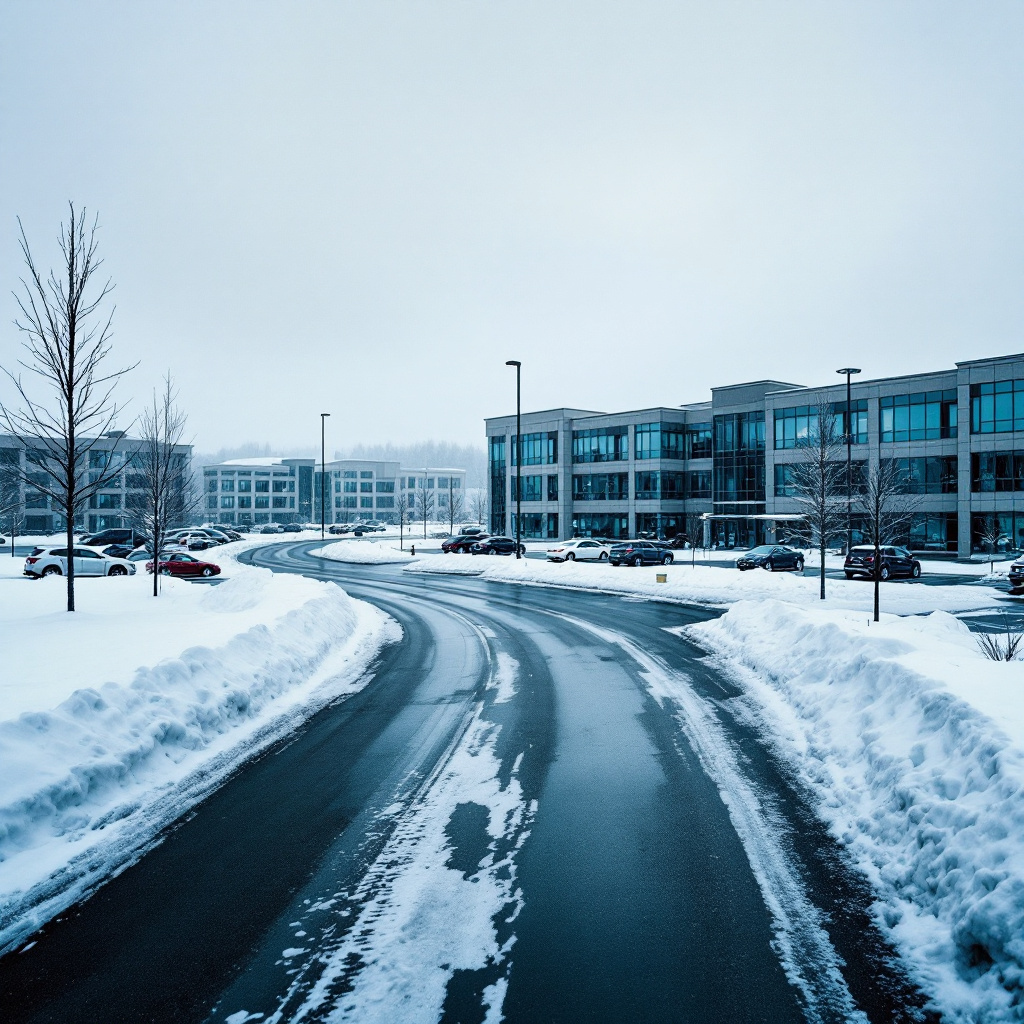
In the Twin Cities, the ground freezes to about 42 inches deep. It freezes deep, stays frozen for months, then thaws and shifts. For this reason, the MnDOT requires 30 to 36 inches of frost-free fill as the base material under flexible pavement. This tells you where the real engineering happens: below the surface you are looking at.
The damage itself is simple. Water gets into a surface, freezes, and expands. That expansion pushes outward harder than the material can resist. Then it thaws, and more water gets in, which freezes again. This damage compounds all winter.
Concrete shows this as spalling and scaling. The surface flakes and pits. De-icing salt worsens it in two ways. First, chloride lowers the freezing point of surface water, meaning the water freezes at a lower temperature. This increases the number of freeze-thaw cycles the slab sees each winter. Salt also migrates into the slab and rusts the reinforcing steel. Research on concrete pavements finds salt scaling is worse than freeze-thaw exposure without salt.
Asphalt handles frost movement better. It flexes when the ground under it heaves. It is also dark, which means the surface absorbs heat from the sun and clears snow faster.
But asphalt does not stay flexible forever. It oxidizes and hardens with age. An old asphalt surface stops flexing, turns brittle, and gets damaged by the same freeze-thaw cycle it used to survive.
One Property, Several Different Surfaces
A commercial site is usually not just one surface. It can consist of a loading dock apron, a drive aisle, and a walkway to the front entrance. All these areas have completely different demands, and treating them as a single concrete or asphalt paving project is how properties end up with the wrong material in the wrong places.
Heavy Load and Point Load Zones
Choose concrete for spots where weight sits still or turns in place.
Asphalt deforms and sinks under sustained load. That is not a maintenance failure. It is what asphalt typically does when a heavy weight presses down on the same spot long enough. Summer heat accelerates it.
These zones fail first:
- Dumpster and compactor pads. A loaded compactor never moves. Garbage trucks then reverse, drop their forks, and lift.
- Loading dock aprons. Trailers park and drop their landing gear. That gear puts enormous weight on a few square inches.
- Fire lanes and truck routes. Heavy traffic following the same path repeatedly cuts ruts.
- Drive-through lanes. Vehicles sit idle in the same spot every day, then turn their wheels while stationary.
These areas are a small part of your total square footage. That is what makes fixing them a small, targeted job rather than a wholesale one. You are not repaving the site. You are only fixing the few places that keep failing.
Drive Aisles, Open Parking, and Where Asphalt Earns Its Place
Choose asphalt across wide, open areas that face lighter loads.
Rolling vehicle traffic spread across a wide surface suits flexible asphalt pavements. A car crossing a drive aisle applies nowhere near the stress that a parked trailer does to a dock apron. Asphalt handles that duty cycle without complaint, making it the right choice for such spots.
Asphalt offers operational advantages that get overlooked until you need them:
- Faster return to service. Asphalt reopens quickly, so your business operations return to normal sooner.
- Easier to dig up. Cutting asphalt to reach a pipe underneath and restoring it is much simpler than cutting through a concrete paving.
- Repairs that disappear. An asphalt patch blends. Concrete repairs remain visible.
- Easier on budgets. Sealcoating and crack filling let you stretch what you already have while a bigger project awaits.
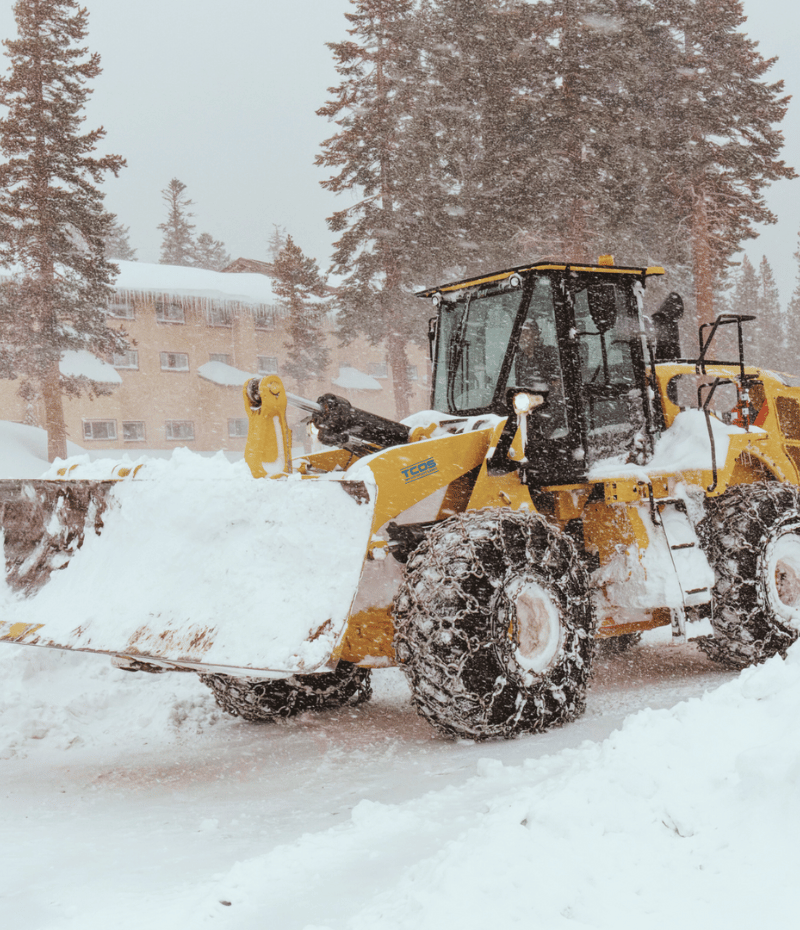
TCOS handles asphalt repair and maintenance on existing surfaces. If your asphalt still has life left, we say so rather than push a replacement you do not need.
Maintenance and Lifespan: What Each Surface Asks of You
| Factor | Asphalt | Concrete |
| Typical service life | Commonly cited in the 15 to 25 year range with consistent maintenance | Commonly cited at 30 years or more |
| Routine maintenance | Sealcoating and crack filling on a recurring cycle | Joint sealing and cleaning, less frequent |
| Common failure mode | Cracking, raveling, potholes | Joint cracking, surface spalling, and scaling |
| Repair method | Patch, resurface, overlay | Cut and replace the full slab, or lift a settled slab |
| Response to de-icing salt | Largely unaffected chemically | Surface scaling; chloride reaching the rebar drives corrosion |
| Best-suited zones | Open parking, drive aisles | Load zones, walkways, pads, aprons |
Treat those lifespans as typical industry ranges, not promises. The actual longevity depends on variables such as the ground, drainage, traffic, and whether the long-term maintenance actually happens.
The Liability Layer That You Cannot Afford to Ignore
Your parking surface is a legal, claims-exposure surface. That is the part most comparisons leave out entirely.
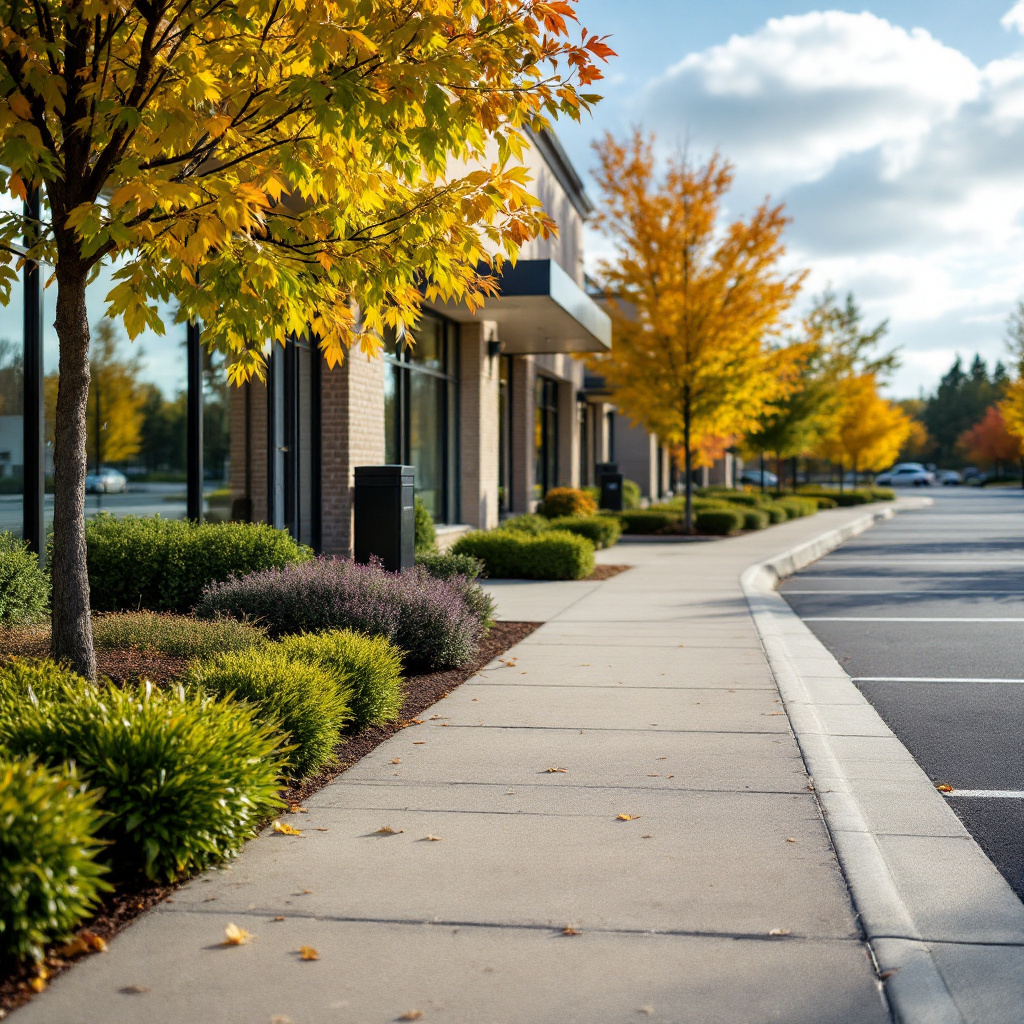
For example the 2010 ADA Standards for Accessible Design require accessible parking spaces and their access aisles to slope no more than 1:48 in any direction. That is about 2 percent. That is close to nearly flat. The surface must also be firm, stable, and slip-resistant.
Now put that in a Minnesota winter. Frost lifts a pavement, and settlement drops it. Neither checks the tolerance first. A stall that was compliant when it was painted can drift out of tolerance over a few seasons. Usually, nobody notices until an inspection or an incident forces it.
The problem points on commercial properties are specific:
- Lifted slab edges create a step where people walk and create trip hazards.
- Potholes inside a marked access aisle are both a fall risk and a compliance failure.
- Ponding water refreezes overnight and turns a low spot into an ice patch.
- Failed drainage(problematic catch basins) soaks the ground below and destroys the surface from underneath.
- Snow piled up in the wrong area puts weight on a surface that was never built for it.
How to Decide, Zone by Zone
When you want to choose between concrete and asphalt, walk your property and ask four questions about each area:
- What load sits or moves here? Heavy and parked high-traffic points toward concrete. Rolling and distributed weight mean asphalt is fine.
- Is this zone salted and plowed heavily?
- How long can this zone be closed? Concrete needs time to harden. If the answer is "not at all," that limits the choice.
- What condition is the base in? This is a key question, and it decides the outcome more than the surface material does.
Start With What Is Under the Surface
Your commercial surface holds weight, defines your accessible routes, and is the first thing a visitor walks across when they arrive. Choosing the right material is a zone-by-zone decision that comes down to load, exposure, and what sits underneath.
TCOS assesses surfaces across the Twin Cities metro and greater Minnesota, and often recommends targeted repair over full replacement of entire sections. See our commercial concrete services and surface restoration work.
Call TCOS at 763-235-2400 or contact us to schedule a commercial surface assessment.
Frequently Asked Questions
Is concrete or asphalt better for a commercial parking lot in Minnesota?
Neither wins across an entire lot. Concrete suits load zones like dumpster pads, dock aprons, and walkways where weight sits still. Asphalt stays reasonable across open parking and drive aisles carrying rolling vehicle traffic. Freeze-thaw cycles hit both. The base underneath often matters more than the surface on top, so assess the base before choosing a material for your commercial setting.
What actually causes concrete to spall in a Minnesota winter?
Water absorbs into the surface and into existing cracks. When it freezes, it expands, generating internal pressure the material cannot resist. The surface flakes and pits. De-icing salt worsens this by lowering the freezing point of surface water, increasing how many freeze-thaw cycles the slab sees each winter, and driving chloride toward reinforcing steel.
Can a settled concrete slab be lifted instead of replaced?
Often, yes. If the slab is sound and has simply sunk, concrete lifting raises it back to grade without a tear-out. It disturbs less of the property and returns the area to service faster. Not every slab qualifies. A cracked or compromised slab needs replacing. TCOS assesses the slab and tells you which case you are in.
How does de-icing salt affect each surface differently?
Asphalt is largely unaffected by salt chemically. Concrete is more vulnerable. Chloride drives surface scaling and, over time, reaches embedded reinforcing steel and accelerates corrosion. Sealing concrete and managing drainage cuts that exposure. Clearing snow promptly helps too, since it reduces the sustained moisture contact a slow melt creates.
Why do most roads use asphalt if concrete lasts longer?
Cost at scale, speed of reinstatement, and utility access. MnDOT data shows the large majority of Minnesota road rehabilitation projects use bituminous pavement. That logic fits public roads carrying rolling traffic across enormous square footage. It does not transfer automatically to a private commercial site, where concentrated loads sit in fixed spots, and failure points are specific.