


Concrete leveling raises a sunken slab back to grade by filling the voids underneath. Nothing gets torn out. So what is concrete leveling for commercial properties? It is a tape measure decision, not solely a judgment about how the slab looks. The 2010 ADA Standards stopped allowing a plain vertical edge on an accessible route at a quarter inch. Above half an inch, that edge has to be ramped.
Half an inch is a big deal. You cannot see it standing up, but you feel it through a shoe, or spot it after a rain when one panel holds a puddle and the next drains. Plow crews find it in January, when a blade catches an edge that sat flush last winter. What matters is which method fits, and why the slab dropped.
This guide answers concrete leveling for commercial properties in practical terms. It covers how the lift works, which method fits which slab, and what makes a lift hold through a Minnesota winter.
Key Takeaways
- Measure before you budget. A quarter inch is where ADA treatment starts. Half an inch is where a ramp becomes mandatory.
- The slab is rarely the problem. Voids under it are. Leveling fills them and lifts the concrete back to grade.
- Two methods, one call. Mudjacking suits larger voids and open access. Polyurethane foam suits tight spots and weak soil.
- Sound concrete lifts; failed concrete does not. A slab cracked into pieces is a replacement job, whatever the elevation reads.
- Drainage decides how long it holds. Lift a slab over water that is still moving soil, and it will drop again.
What Is Concrete Leveling for Commercial Properties?
Concrete leveling is the process of raising a sunken concrete slab back to its original position by filling the voids beneath it. The slab stays where it is. No demolition, no hauling, no new pour.
The naming gets confusing, which makes bids hard to compare. One contractor writes concrete lifting, the next slab jacking/slabjacking, a third concrete raising. All are the same work. Mudjacking and foam leveling are narrower. They name what comes out of the hose, and the two behave differently on soft ground.
Sidewalks along a building often sit on backfill. Loading docks take the heaviest wheel loads, and parking lot panels near a catch basin sit where water concentrates. Those, plus entrances and drive lanes, are where concrete leveling for commercial spaces gets used.
How Does Concrete Leveling Work?
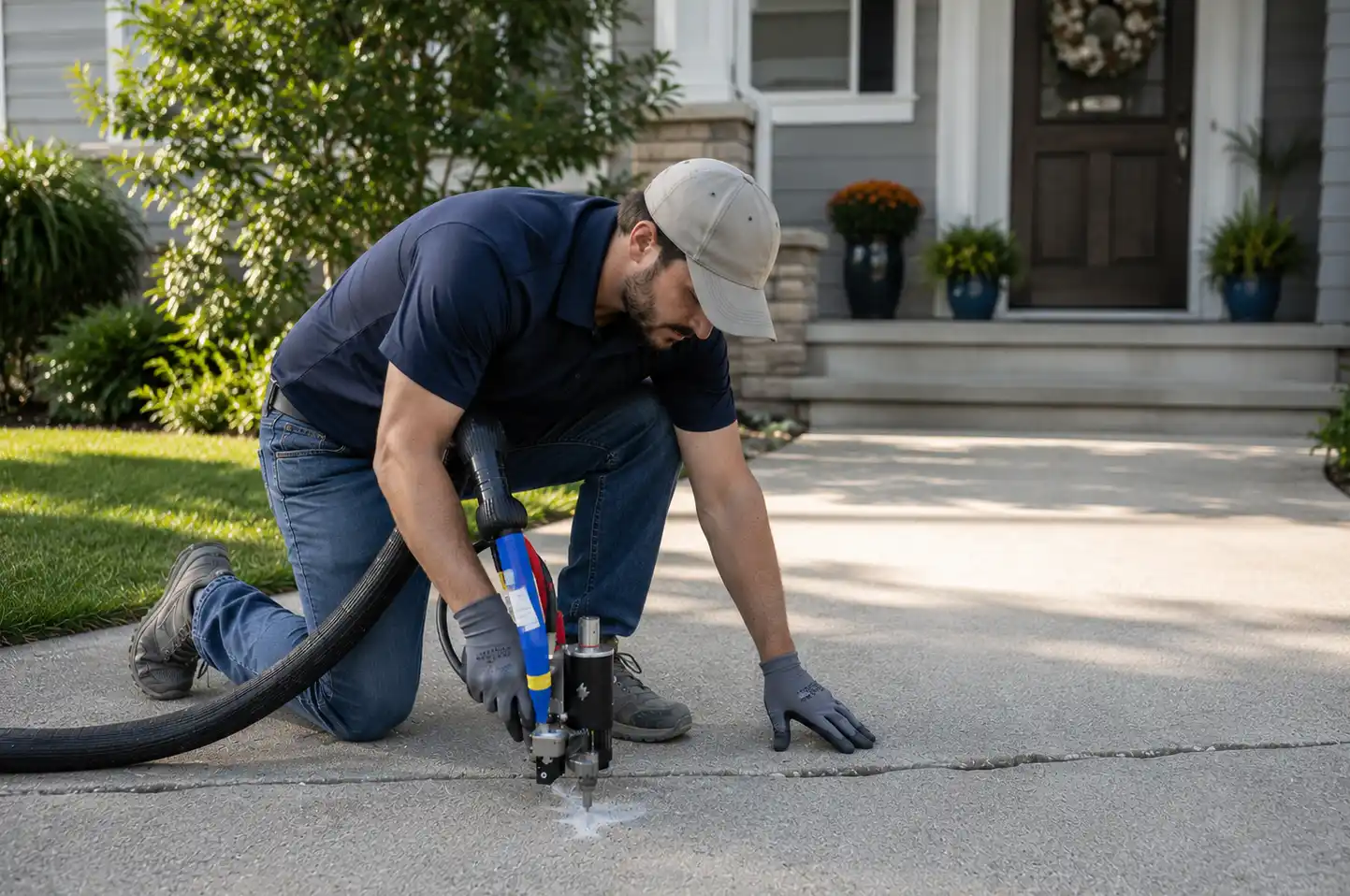
The leveling process runs in three stages. Crews drill small holes through the slab, pump a leveling compound underneath to fill voids and raise the concrete, then seal the holes. The first stage decides whether the other two are worth doing.
Site assessment and diagnosis
The cause of settlement decides the repair. TCOS crews look for three things on site: soil erosion, poor drainage, and an unstable sub-base.
The mechanism is simple. Soil beneath the slab washes out or compacts. A void opens. The slab drops into it.
Diagnosis comes first. If moving water is still cutting through the sub-base, lifting the slab buys time and nothing more. The assessment records which panels moved, how far, and where surface water travels.
Filling voids and lifting the slab
Both methods follow the same sequence. A crew drills small holes through the slab. Material goes in under pressure, spreads beneath the concrete, fills the voids, and lifts the slab toward its original position. The holes get sealed afterward.
The real difference lies in what gets pumped. TCOS injects mudjacking and polyurethane foam, then selects between them after the assessment.
Weight decides more of these calls than people expect. Heavy fill pumped onto a weak sub-base can restart the settlement the lift just corrected. Expanding foam adds far less load.
|
Factor |
Mudjacking |
Polyurethane foam injection |
|
Material pumped |
Cement, soil, and water slurry |
Expanding polyurethane foam |
|
Weight added to sub-base |
Heavier fill |
Lightweight fill |
|
Best-suited conditions |
Larger voids, open access, stable soil |
Tight access, thinner slabs, weaker soil |
|
Access and footprint |
Larger injection holes, bigger equipment |
Smaller holes, smaller equipment |
Finishing and verifying the surface
Reaching grade does not mean the job is finished. Crews patch the injection holes, then seal cracks and caulk joints.
Sealing matters more than it appears. Open cracks and joints let surface water run straight back to the sub-base, which is what caused the settlement in the first place.
Verification comes last. The crew confirms the panel meets surrounding grade and that water runs off instead of pooling.
Why Half an Inch of Settlement Becomes a Compliance Problem
The ADA threshold sits lower than most property managers expect. The U.S. Access Board's guide to the 2010 ADA Standards sets three tiers for a vertical difference on an accessible route:
- Up to 1/4 inch: permitted as a vertical edge
- Between 1/4 and 1/2 inch: must be beveled at a slope no steeper than 1:2
- Above 1/2 inch: must be treated as a ramp or curb ramp
The middle tier matters most. Under half an inch, you can bevel the edge and be done. Over it, patching does not make the route compliant. You ramp it or put the slab back. So measure with a straightedge, not by eye. A settled sidewalk that reads as ordinary wear can sit past the limit, which is how trip hazards go unlogged.
Code is one potential exposure. Injury claims are the other, and a panel on a daily walking route sits in that category. Uneven concrete surfaces cause smaller problems. Water pools on the low panel instead of reaching the inlet; design guidance calls for at least 1 percent slope, and forklifts jolt across a dropped dock.
The measurement tells you something has to happen. It does not tell you what.
When Leveling Fits and When Replacement Wins
The rule is short. If the existing concrete is sound and has simply moved, it is a leveling candidate. If the concrete itself has failed, moving it solves nothing.
That makes leveling cost-effective in a narrow way. It reuses a concrete structure that still has service life. It does not rescue concrete that has none.
|
Slab condition |
Likely path |
|
Sound slab that has dropped |
Leveling and correcting uneven surfaces; the concrete still performs |
|
Cracked into several pieces or crumbling |
Replacement; lifting fragments fixes nothing |
|
Voids beneath an otherwise intact slab |
Leveling, fill the void and restore support |
|
Spalled, flaking, or worn through |
Replacement; the surface itself has failed |
Scope drives what a leveling project runs: slab count, void size, site access, and whether drainage correction belongs in the same job.
What Makes a Lift Last in Minnesota Conditions
How long does concrete leveling last in commercial settings? It depends on whether the crew corrected the cause.
Minnesota makes the point plainly. The state building code requires footings in the Twin Cities metro to sit 42 inches below grade for frost protection. That tells you how deep the ground freezes here. Water expands roughly 9 percent when it freezes. If it gets trapped in a saturated sub-base, it pushes on the slab above it every winter.
A lift placed over wet, poorly drained soil works against that cycle. A lift placed after drainage is corrected does not.
This is why leveling and drainage work often get scheduled together. Grade at catch basins and inlets decides where water goes. Periodic inspection catches new movement while it is still a leveling job rather than a replacement job.
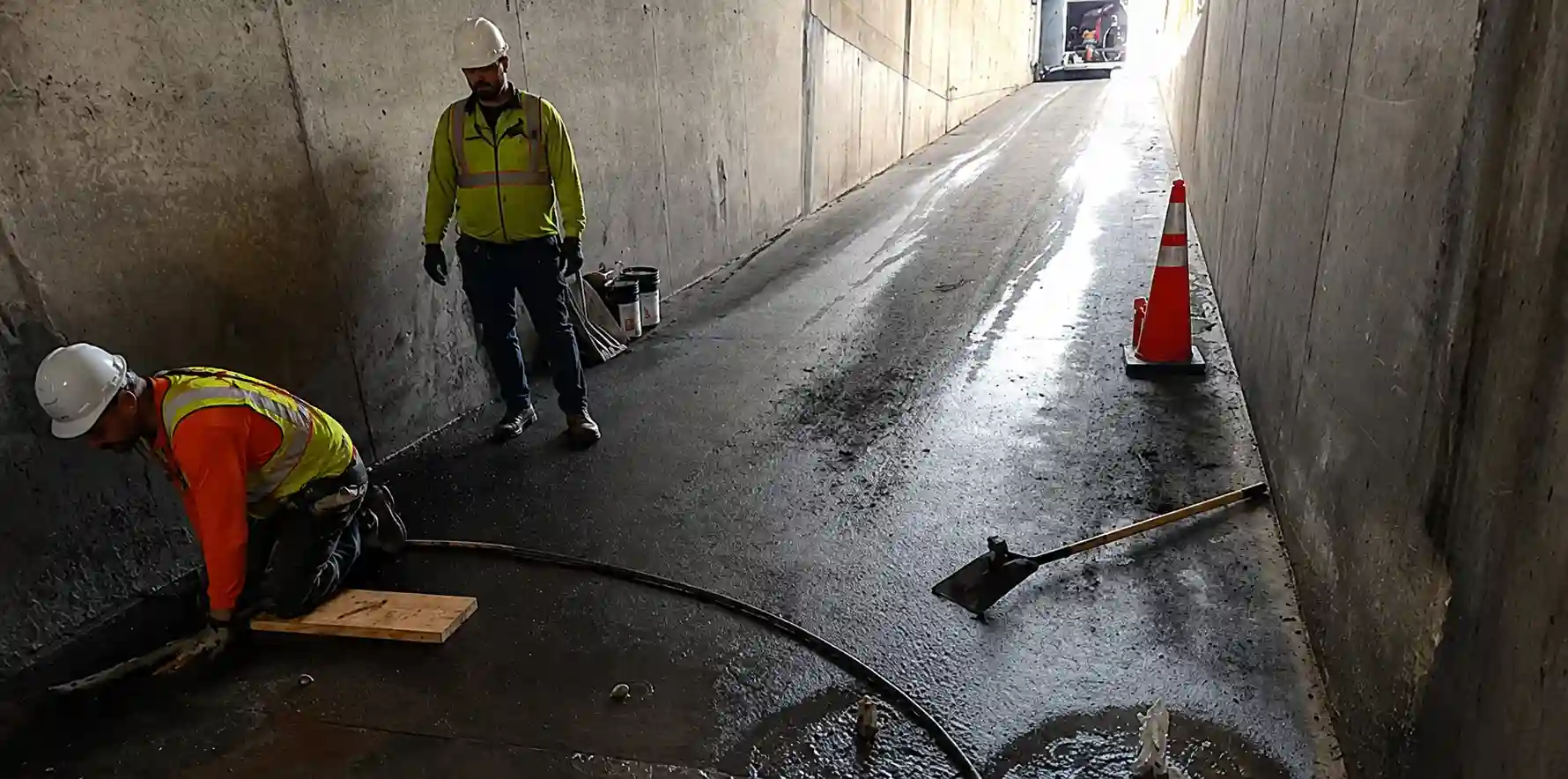
Experience That Shapes the Assessment
TCOS has operated for more than 30 years and completed hundreds of projects. The company holds affiliations with BOMA International, IREM, IFMA, SIMA and many others.
How the work fits an operating property matters. Crews schedule around business hours, so drive lanes, entrances, and loading docks stay usable. Assessment happens before any work gets started, so the cause gets identified rather than assumed. Our commercial concrete leveling services also cover replacement and the drainage work that often travels with them.
Frequently Asked Questions
How long does concrete leveling take on a commercial property?
Leveling skips demolition, hauling, and the cure window new concrete requires, so it moves faster than replacement. Scheduling depends on slab count, site access, and the business hours crews work around. A single sidewalk panel and a full parking lot are completely different projects.
Will leveled concrete settle again?
It can, if the cause was never corrected properly. Lifting a slab over active soil erosion or a drainage problem treats the symptom only. Minnesota winters add pressure, because water in a saturated sub-base expands as it freezes. Correcting drainage first is what makes a lift and level surface hold and eliminate trip hazards.
Mudjacking or polyurethane foam injection: which suits a commercial slab?
Neither wins in general. The choice depends on void size, sub-base stability, slab thickness, site access, and how much weight the soil can carry. Mudjacking handles larger voids. Polyurethane foam adds less load and needs smaller holes. TCOS uses both and selects after assessing the site.
Can concrete leveling bring a settled sidewalk back into ADA compliance?
Yes, when the concrete is sound and the problem is elevation. Restoring the panel to grade removes the vertical difference that created the issue. Anything above half an inch still requires a ramp, so measurement confirms compliance rather than appearance. A cracked or spalled panel needs replacement instead.
Does concrete leveling repair cracks?
No. Leveling corrects elevation only. Crews do seal cracks and caulk joints during finishing, which keeps water out of the sub-base, but that is surface work rather than structural concrete repair. A slab broken into several pieces is a replacement candidate.
Get Your Settled Slabs Measured Before Winter
Two things decide your next move. The measurement tells you whether you have a compliance problem. The cause tells you whether a lift will hold and restore safety.
Guessing on either gets expensive. A panel that reads as cosmetic can sit above the ADA threshold. A lift placed over an uncorrected drainage problem will settle again.
TCOS assesses sunken concrete on commercial properties across the Twin Cities metro. Crews identify what moved the slab, then recommend leveling or replacement.
Call 763-235-2400 or request an assessment to get your settled panels measured.