

Grounds maintenance is not just mowing. Mowing is one task inside it. Professional, commercial grounds maintenance is the contracted, year round care of everything outside your building: turf, planting beds, trees and shrubs, irrigation, walkways, entrances, parking areas and the drainage that protects all of it. It is what keeps a property leasable, safe and predictable for the people who use it every day.
Twin City Outdoor Services has managed commercial grounds across the Twin Cities metro since 1997. Thirty years in, our crews work office parks, retail centers, industrial campuses and multi property portfolios in Minneapolis, St. Paul and the surrounding suburbs.
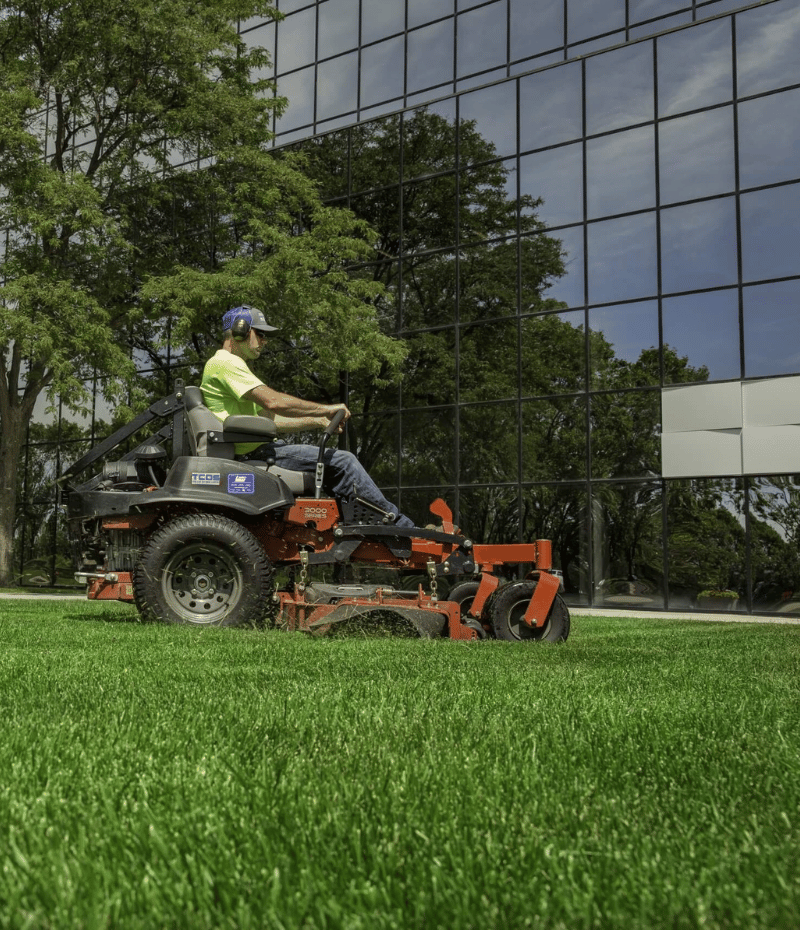
What a commercial grounds maintenance program covers
A program is a seasonal strategy – not a list of visits you have to chase. A TCOS grounds maintenance agreement is built around the property, then executed on a set rotation with documented site walks.
| Area | What it includes | Typical cadence | | — | — | — | | Turf care | Mowing and trimming, fertilization, weed control, aeration and overseeding | Weekly in season, treatments by agronomic window | | Planting beds | Weed control, mulch refresh, bed edge definition, seasonal color where specified | Weekly to monthly, mulch annually | | Trees and shrubs | Pruning, shaping, clearance over walks, drive lanes and signage | Seasonal | | Irrigation | Startup, monthly checks, head and zone repairs, controller adjustments, fall blowout | Spring through fall | | Site details | Walk and curb line edging, hard surface blowoff, litter and debris removal, entrance presentation | Every visit | | Seasonal transitions | Spring cleanup, fall leaf removal, cutback and winter prep | Twice yearly | | Drainage and surfaces | Catch basin condition monitoring, reporting on asphalt and concrete defects | Every site walk |
Why property managers consolidate grounds care
Most of the properties we take over are running multiple, segmented and separate vendors outside between seasons. Nobody owns the property as a whole, and this creates gaps in the overall process.
Consolidating solves four problems at once.
Accountability. One agreement, one point of contact, one crew that knows the site. When something is missed, there is no argument about whose scope it was.
Documentation. Site walk notes and completion records give you something to hand an owner, a tenant or an insurer.
Early warning. The crew that is on your property every week is the crew that sees the settling sidewalks, the failing catch basin and the irrigation leak before they become larger problems.
Winter continuity. The same team that maintains your turf and beds all summer knows where the curbs, hydrants and drainage structures are when the snow covers them. That knowledge protects the property from plow damage and protects you from unnecessary spring repair bills.
What separates a real grounds program from a mowing contract
A mowing contract focuses on a task. A grounds maintenance program focuses on an outcome – and the difference shows in the details a good scope specifies.
1. Defined site map. Every zone identified, measured and assigned, so nothing is left to interpretation at the property line. 2. Named service windows. Which day, what happens on that visit, and what triggers an off cycle visit. 3. Agronomic calendar, not a mowing calendar. Fertilization, pre-emergent, broadleaf control, aeration and overseeding are timed to the season and the turf, not to a convenient route day. 4. Irrigation ownership. Startup, in season monitoring, repair response and blowout stated in scope. 5. Reporting. Written site walk notes with photos, so the condition of the property is a record rather than an opinion. 6. Escalation path. Who you call, and what the response time is, when a tenant complaint or a storm changes the day. 7. Winter integration. How the grounds scope hands off to snow and ice management, including staking, marking and protection of beds and turf edges before the first winter event.
The Twin Cities calendar
Minnesota grounds work is dictated by a short, intense season. Planning the year backward from freeze up is what keeps a property from playing catch up all summer.
| Window | Focus | | — | — | | April to early May | Spring cleanup, debris removal, bed edging, irrigation startup, first fertilization | | Mid May to June | Mowing cadence set, mulch installed, pre-emergent weed control, early season pruning | | July to August | Turf stress management, irrigation audits and repairs, bed weed control, hard surface defect reporting | | September to October | Aeration and overseeding, fall fertilization, shrub cutback, leaf removal begins | | Late October to November | Final cleanup, irrigation blowout, winter prep, snow route staking and site marking |
How TCOS runs a property
We start with a site walk and a customized written scope built from what the property actually needs, not a template. Crews are assigned to properties rather than routes, so the same people learn your site. Every visit is documented. Anything outside grounds scope that we see – a heaving sidewalk, a failing catch basin, alligatored asphalt at a drive entrance – gets reported with photos so you can plan the repair instead of discovering it.
Because TCOS also runs commercial snow and ice management along with concrete and asphalt services across the same service areas, a grounds agreement can carry straight through winter with one vendor who already knows the property. Learn more about commercial snow and ice management, concrete services and asphalt repair.
Request a property assessment
Send us the address and we will walk the property, document its current condition and prepare a written grounds maintenance strategy for you. Contact TCOS or call the Plymouth office.
Frequently asked questions
Is grounds maintenance the same as landscaping? No. Landscaping generally means installation work, new beds, plantings or hardscape. Grounds maintenance is the ongoing contracted care of what is already there, on a schedule, with documentation.
Do you work with single properties or only portfolios? Both. Many of our clients are property managers and/or companies with multiple Twin Cities sites, and consolidating them under one agreement is very advantageous.
What areas do you serve? The entire Twin Cities metro area.
Can grounds maintenance and snow removal run on one agreement? Yes, and it is the arrangement we recommend. The same site knowledge that protects turf and beds in the summer protects them during plowing in the winter.