

When winter storms hit, figuring out the best way to remove snow from sidewalk areas becomes more than a seasonal chore — it's a business imperative. Heavy snow and ice on sidewalks and walkways turn once‑safe paths into slippery hazards that can lead to serious slip, trip, and fall injuries. Across Minnesota, cold weather contributes to thousands of fall‑related trips to emergency rooms every year, and a significant share of those stem from icy surfaces around buildings and commercial walkways.
For commercial property owners and managers, commercial sidewalk snow removal isn't simply about appearance — it's about protecting visitors, employees, and customers while ensuring compliance with local safety and accessibility expectations. Professional snow and ice management keeps walkways clear and reduces liability risks when winter throws your way its worst.
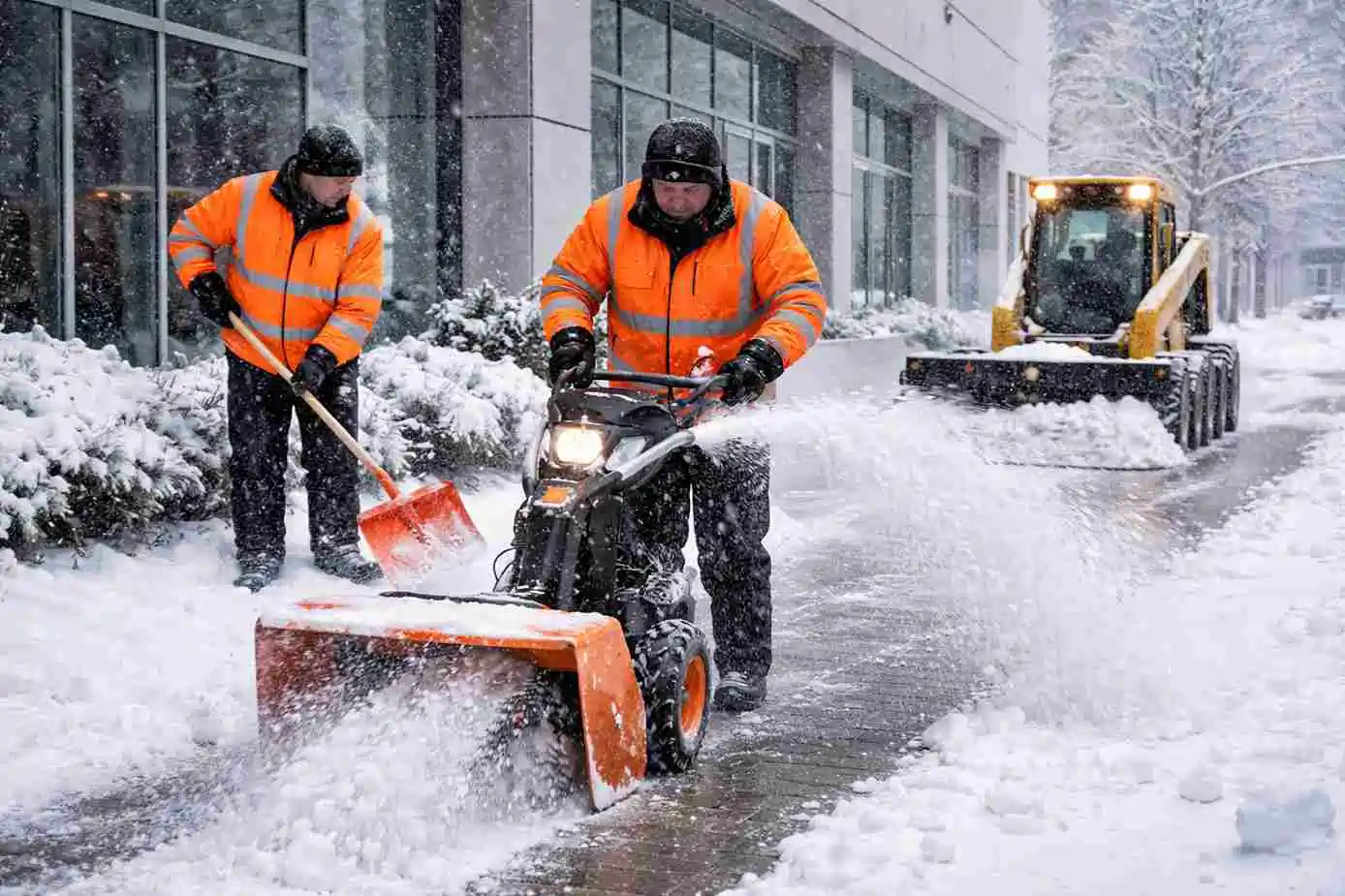
By using the right equipment for the job, professionals make snow management more effective, ensuring commercial properties stay safe and accessible during even the harshest winter conditions.
Key Takeaways:
- Protect Your Property and People: Professional snow removal ensures that your commercial sidewalks remain safe, reducing the risk of slip-and-fall accidents and liability issues during winter storms.
- Efficient Snow and Ice Management: Timely clearing and smart salting strategies, such as pre-treating surfaces with brine, keep your walkways clear and prevent ice buildup, saving time and reducing long-term maintenance costs.
- Compliance and Operational Continuity: Professional services help you meet local snow removal ordinances, ensuring your business stays compliant, operational, and accessible for customers and employees throughout the season.
Commercial Sidewalk Snow Removal: Key Challenges & Risks
For commercial properties, managing snow and ice on sidewalks isn't just about keeping things neat — it's about facing the challenges of winter weather while protecting both people and business operations. During winter storms, larger foot traffic from customers and employees puts added pressure on walkways. This can quickly transform sidewalks into dangerous zones for slips, trips, and falls. Beyond the physical hazards, there are legal and compliance risks to consider. Cities often impose strict sidewalk snow-clearing requirements, with set time frames for clearing walkways after snow falls. Failing to comply with these ordinances could result in fines or worse, legal liability in case of accidents. That's why using professional services to handle commercial snow removal is not just a convenience — it's a necessary investment in safety and legal protection.| Challenge | Professional Solution / Benefit |
| Snow + Ice Hazards | Timely clearing to reduce slip risk |
| ADA Compliance | Precision plowing and de‑icing for accessibility |
| Legal Liability | Documented professional service for protection |
What Professional Snow Removal Entails
Proper commercial sidewalk snow removal requires more than just a shovel or salt. It involves a well‑coordinated process that includes specialized equipment and expert operators. Each step is tailored to handle specific challenges presented by the weather, foot traffic, and property layout. Here's a closer look at what goes into professional snow removal.Professional Snow Plowing
For commercial sidewalks and walkways, plows are essential for clearing large areas quickly and effectively. Plowing is necessary for wide sidewalks and the paths that lead to entrances, ensuring no snow accumulation remains that could cause hazards. The use of compact snow plows is crucial for sidewalks and narrow paths where larger plows may not fit. These machines can handle heavy snow and keep walkways clear, ensuring safe passage for everyone.Commercial Snow Blowers & Precision Clearing
When deep snow accumulates, commercial snow blowers are often just as important as plows. A snowblower allows professionals to quickly clear the snow from walkways, keeping things snow-free and minimizing the need to pile snow up where it could obstruct access. Snow blowers are especially useful around fixtures, street furniture, or in tight spots that require precision. Professional operators are trained to avoid surface damage and ensure that the snow is removed efficiently without harming the property.Ice Management & De‑icing
Ice management is just as crucial as clearing snow, especially when temperatures dip below freezing. Professionals typically use salt and brine to manage ice. Salt works by lowering the freezing point of water, preventing ice from forming an attachment with the sidewalk. A smart salting strategy involves the calibrated application of rock salt or brine to avoid excess and waste. Applying too much salt can be harmful for surfaces or nearby vegetation, while too little can leave sidewalks slippery and unsafe. By using the right amount of de‑icer, professionals ensure that sidewalks remain clear and safe throughout the winter season.Best Timing for Sidewalk Snow Removal
When it comes to commercial sidewalk snow removal, when the snow gets cleared can be just as important as how it gets cleared. Professionals use timing strategically to make sure sidewalks stay safe, minimize the need for repeated clearing, and reduce ice formation — especially critical on walkways with heavy foot traffic coming and going throughout the day. Here's how timing plays into a smart snow removal plan:Before Snow Ends (Anti‑icing / Brine Application)
Applying a light layer of brine or salt before snowfall ends — especially before heavy snow starts — helps prevent snow from bonding tightly to the surface. This creates better traction and buys time before deeper snow needs removal. When applied correctly by professionals, pre‑treatment can significantly reduce ice and make the snow easier to manage once it falls.Immediately After Snow Accumulation
Fresh snow is easiest to remove before it settles or melts and refreezes into ice. Snow removed promptly won't compact under foot traffic or vehicle movement, making the job faster and reducing the need to apply excessive salt later.During Extended Storms
In long or heavy snowstorms, experienced crews don't wait until the end — they return in multiple shifts to clear snow away as it falls. This keeps walkways and entrances passable throughout the storm and prevents large piles from blocking access points. Timing snow removal this way keeps surfaces safer, reduces snow and ice buildup, and makes the entire process more efficient — especially when heavy snowfall and slippery conditions are constant threats in commercial environments.De‑icing & Salt Use: Professional vs. Improper Application
When it comes to snow and ice management on commercial properties, salt is an essential tool. But not all salt applications are created equal. Professional snow removal teams use salt and de‑icing materials in ways that are both efficient and protective of surfaces — ensuring that sidewalks stay safe without damaging the environment or property. Here's how professionals use salt smarter than DIY approaches:Smart Salting Saves Money & Protects Surfaces
Overuse of salt not only leads to environmental harm but also damages concrete, plants, and nearby vehicles. Professionals know that using the right amount of salt reduces waste, lowers costs, and minimizes harm to surfaces.Salt Only After Plowing/Clearing First
It's critical to clear snow before salting. Applying salt to a thick layer of snow prevents it from being effective and can cause more harm than good. Professional snow removal teams first plow and clear snow so that the salt can work effectively on exposed surfaces, preventing ice from forming.Optimal Salt Choice (NaCl vs. Alternatives) Based on Temperature
Professionals also know that different salts work better at different temperatures. Sodium chloride (NaCl), for example, works well in moderate cold but becomes less effective below 15°F. For colder temperatures, professionals may switch to more efficient de-icing agents like calcium chloride or magnesium chloride, which work at lower temperatures without causing as much damage to surfaces. By using salt in a smart, controlled way, professionals ensure that your sidewalks are safe, the surfaces are protected, and unnecessary costs are avoided.Professional Equipment That Makes Snow Removal Efficient
The right sidewalk snow-removing equipment can make all the difference when it comes to quickly and effectively clearing a path along commercial sidewalks. Professionals use specialized tools that are designed for efficiency, safety, and speed, ensuring that walkways are cleared effectively without causing damage to the property. Here's a quick look at the key equipment used by snow removal experts:Walk Behind Sidewalk Plows & Blowers
Walk-behind plows and snow blowers are ideal for tight spaces like sidewalks, parking lot entrances, and narrow walkways. These tools are great for removing snow with precision, allowing professionals to clear snow quickly without blocking entrances or other crucial access points.Rotary Brooms + Spreader Systems
Rotary brooms are excellent for removing light snow quickly, especially in large open areas. Paired with spreader systems, they not only remove snow but also apply salt and de‑icing agents uniformly, ensuring that sidewalks remain safe and slippery areas are managed effectively throughout the winter.Specialized De‑icing Spreaders
For precision in de‑icing, professionals use specialized spreaders that are calibrated for sidewalks. These spreaders ensure that salt and brine are applied evenly, protecting the surfaces while melting ice and snow without overuse, which can cause unnecessary harm to the environment and concrete. Here's a simple table to compare equipment:| Equipment | Best For | Ideal For |
| Walk‑Behind Plows/Blowers | Narrow spaces, sidewalks, entrances | Quick, efficient clearing |
| Rotary Brooms + Spreaders | Light snow, uniform salt application | Speedy clearing and salting |
| De‑icing Spreaders | Precision de‑icing for sidewalks | Controlled, targeted salting |
Benefits of Hiring Professionals for Commercial Snow Removal
Hiring professionals for commercial sidewalk snow removal goes beyond just getting snow cleared. It also brings several key advantages that can protect your business, ensure compliance, and improve operational efficiency. Here's how professional snow removal services provide value:Enhanced Safety & Reduced Liability
- Fewer Slip‑and‑Fall Incidents: Snow and ice buildup can cause serious accidents, leading to costly injuries. With professional snow removal, sidewalks are cleared promptly, significantly reducing the risk of slip‑and‑fall incidents.
- Documented Services Help Protect Against Claims: Professional snow removal services track each visit and keep records, which can serve as valuable documentation in case of a legal claim. This proactive approach protects businesses from potential liabilities related to accidents on their premises.
Compliance & Ordinance Adherence
Cities often require sidewalk clearing within a fixed timeframe. Municipal regulations often set strict deadlines for clearing sidewalks after a snowstorm. Missing these deadlines can result in fines or penalties. Professionals understand local ordinances and ensure timely compliance, keeping your business out of trouble.Operational Continuity
Customers and employees can access facilities without disruption. Snow and ice can block entryways, causing disruptions to your operations. By using professionals, you ensure that your customers and employees can safely access your business, no matter the weather. This ensures smooth day-to-day operations and keeps your business running efficiently, even during harsh winters.Cost Savings & Efficiency
As the old saying goes, time is money. Professional snow removal services are faster and more efficient than DIY efforts, which means less downtime for your business. Professionals use the right snow removal equipment and techniques to clear snow thoroughly and quickly, preventing delays, reducing operational disruptions, and ultimately saving your business money. The time saved by professionals also allows your team to focus on more critical tasks, further improving productivity.