



Why Successful Winter Ops Are a Key Business Issue
In winter, professional snow and ice management acts like business insurance. It keeps operations safe, smooth, and uninterrupted. For commercial properties, uptime is critical: icy walkways, unplowed lots, and neglected sidewalks can disrupt daily activity, raise liability risks, and damage a brand's reputation. A full commercial snow and ice management service plan can include de-icing, sidewalk clearing, snow plowing, hauling, and documentation of every snow event. With smart salt use, eco-friendly practices, and a proven snow and ice management program, property owners can lower accident rates, protect staff and visitors, and meet safety standards all winter long. This blog will help you understand how to maximize these services for your commercial snow management needs.Key Takeaways
- Reliable commercial snow removal protects uptime, safety, and reputation.
- Smart de-icing and eco-friendly snow services lower costs and risks.
- Documentation and management services help reduce liability claims.
What "Commercial Snow and Ice Management" Includes
Commercial snow and ice management is a structured, preventative, and responsive program designed to keep commercial properties safe, operational, and compliant throughout the snow season. Professional snow removal services typically include:Preseason Planning
A strong ice and snow management program starts long before the first snowfall. Certified snow professionals review site layouts, mark high-priority areas like sidewalks, entries, and roadways, and set clear Levels of Service (LOS). Pre-storm inspections help property owners prepare for winter weather and reduce risks.Anti-Icing Applications
Many commercial snow removal services use brine or liquid pretreatments to stop ice from bonding to pavement. This preventative step lowers the amount of salt needed later, making it more eco-friendly while keeping surfaces safe.Plowing and Snow Removal
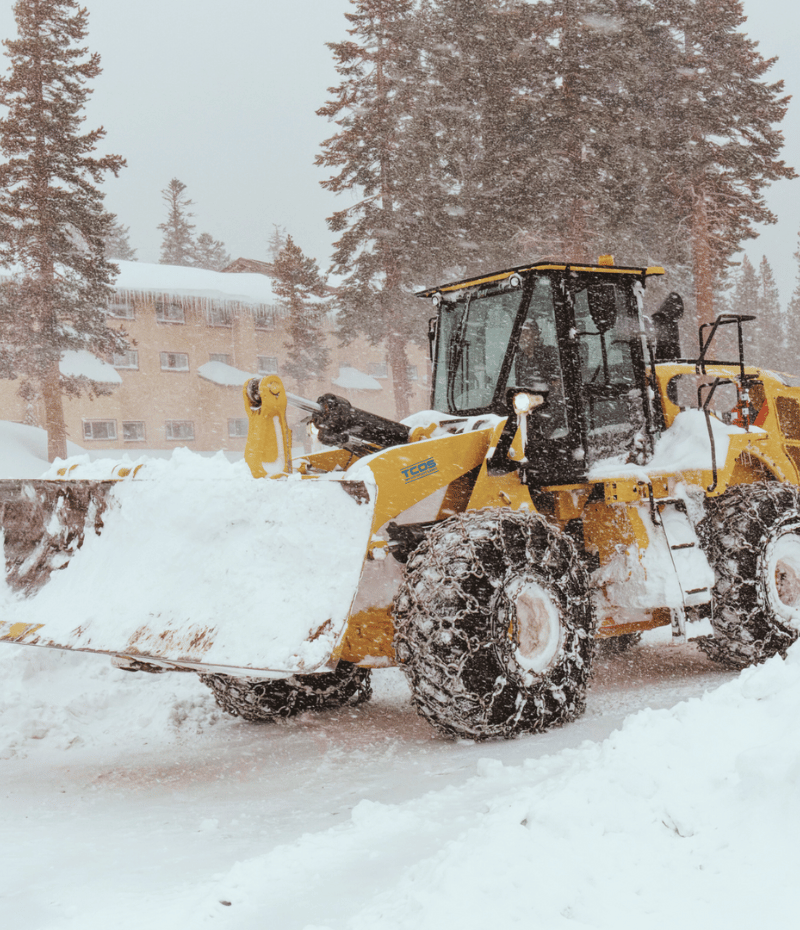
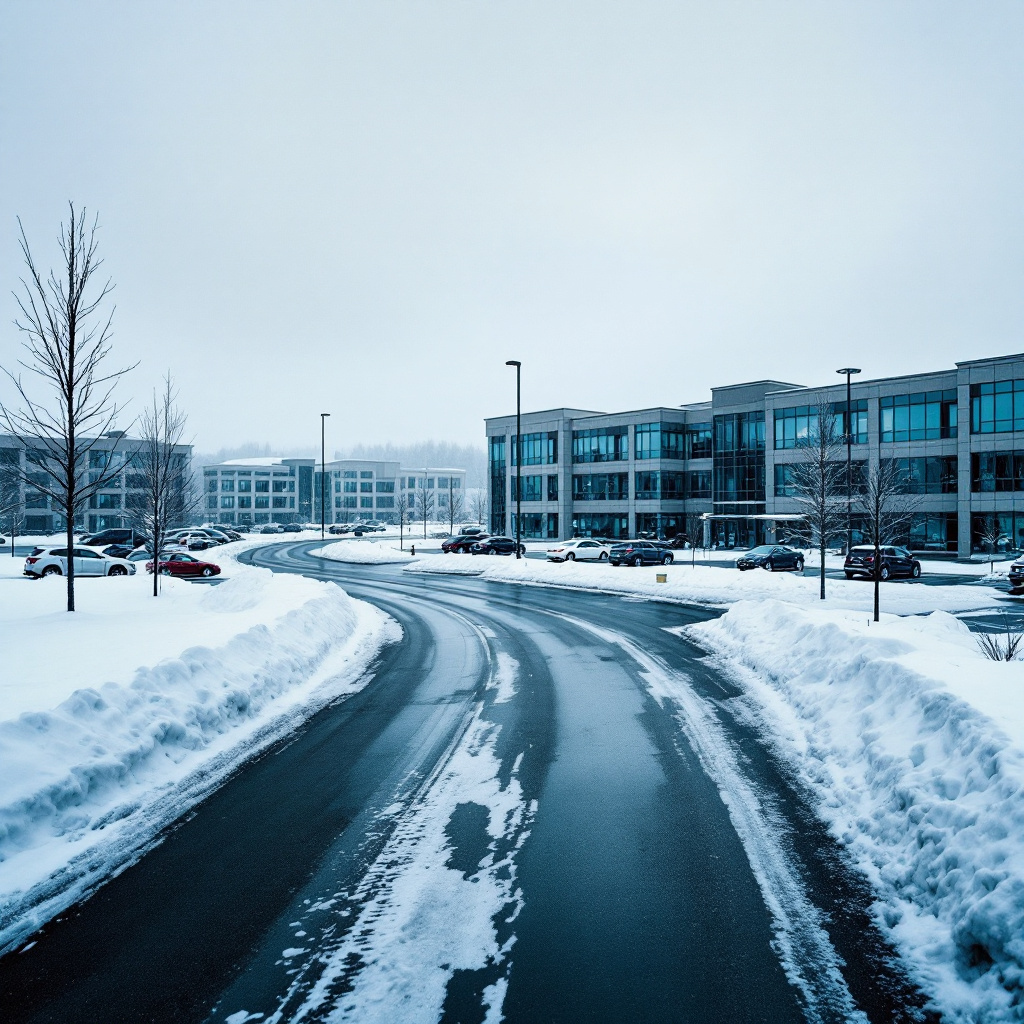
During a snow event, professional commercial snow plowing clears parking lots, drive lanes, and roadways. Large sites may also need snow hauling or relocation services to handle heavy piles.De-Icing and Ice Removal
After plowing, targeted de-icing services treat slippery spots on walkways, sidewalk clearing, and entries with salt, sand, or liquid de-icers. Done correctly, this reduces liability from costly slip and falls.Post-Storm Audits and Recordkeeping
Tracking each snow event is critical. Service providers should document plowing, de-icing and ice removal services with timestamps, photos, and weather conditions, ensuring accountability and protecting against claims. With a comprehensive snow and ice management program, businesses can trust that their commercial facility will remain safe, accessible, and professional throughout the toughest winter months.Levels of Service (LOS): How to Set Expectations
A Level of Service (LOS) framework defines how ice and snow management services are delivered during every snow event, ensuring that commercial properties remain safe, operational, and compliant through the entire snow season.Key LOS elements
- Trigger Depth – This is the agreed snowfall depth, such as 'Trace', 1, or 2 inches, that starts a snow removal service or commercial snow plowing response. High-risk facilities like hospitals or emergency lanes often require zero-tolerance snow management, where plowing begins upon any accumulation.
- Service Initiators & Timeframes – These define when snow removal partners send crews once snowfall begins. A standard LOS may require plowing within two hours, while a substantially clear of hazards approach allows more flexibility depending on site needs.
- Priority Zones – Different areas have different levels of urgency in snow and ice management.

Procurement Timeline & Contract Basics for Commercial Sites
For commercial snow removal services, procurement should start early. The ideal RFP window begins in May, with contracts awarded by September 1 to secure availability before the snow season. Written contracts are essential to define snow and ice management services, outlining responsibilities for plowing, ice removal, sidewalk clearing, and de-icing.Must-haves in a snow removal service contract
- Site assessments & maps for plow routes, sidewalks, and priority zones.
- Material allowances/prohibitions (salt, brine, or eco-friendly ice melt).
- Communication plans for real-time updates during each snow event.
- Post-storm follow-ups for audits and recordkeeping.
Contract models
- Seasonal (flat rate)
- Per-event (pay per storm)
- Per-push(‘Tiered’)
- Time & materials (T&M)
Site Assessments That Reduce Risk
A thorough site assessment is the foundation of safe and effective commercial snow management services. Before the winter months, certified snow professionals conduct a detailed walk-through to identify hazards and map out efficient snow services.Key Elements for Site Assessment
- Egress routes and emergency access points.
- Designate snow plowing and snow hauling services zones for safe stacking.
- ADA stalls, docks, and ramps require priority clearing.
- Site lighting conditions that impact visibility.
- Areas prone to thaw-refreeze cycles during the snow season.
- Shared lots or multi-site properties with coordinated access.
- Environmental constraints, including drainage and eco-friendly material use.
Safety & Liability: Why Timing and Documentation Matter
When snowfall or freezing rain hits, every hour that sidewalks, walkways, and roadways remain untreated increases the risk of slips, falls, and accidents. Accurate documentation is required to protect businesses from liability claims, showing that hazards were addressed promptly and that a comprehensive snow and ice management program was followed. Therefore, compliance with OSHA guidance is necessary for your commercial properties, as it is key to reducing accidents on commercial properties during the snow season.Smart Salt & Brine: Safety Without Over-Salting
Anti-icing, using a pre-treat brine solution, prevents snow and ice from bonding to pavement, allowing for more efficient plowing and reduced de-icer use. Research from MnDOT's Anti-Icing Guide shows that thin layers of liquid brine (for example, ~20 gallons per lane-mile) applied under the right conditions help minimize refreeze risk and reduce chemical overuse. (Source: Minnesota Department of Transportation). Meanwhile, Minnesota's Smart Salting program reports that organizations have reduced salt use by 30-70% while maintaining road safety. (Source: PCA Minnesota).| Method | When Used | Typical Application Rate | Pros | Environmental Impact |
| Anti-icing (Brine) | Before a winter storm, to prevent bonding | ~20–40 gallons per lane-mile | Prevents bond, speeds plowing, reduces salt use | Lower chloride load, more environmentally friendly |
| De-icing (Salt/Granular) | After snow/ice accumulation | 200–300 lbs per lane-mile | Breaks ice bond, restores traction | Higher chloride use, runoff concerns |
| Sand/abrasives | Extreme cold, limited melt conditions | 1,000–1,500 lbs per lane-mile | Provides traction when salt is ineffective | Adds grit to waterways, requires cleanup |
| Blended products | Pre/post storm, depending on the product | Varies by formulation | Extended effectiveness, lower freeze point | Mixed—depends on blend, some eco-friendly options |
Addressing the High Risk Zones
Sidewalks & Entrances: The Highest-Risk Zones
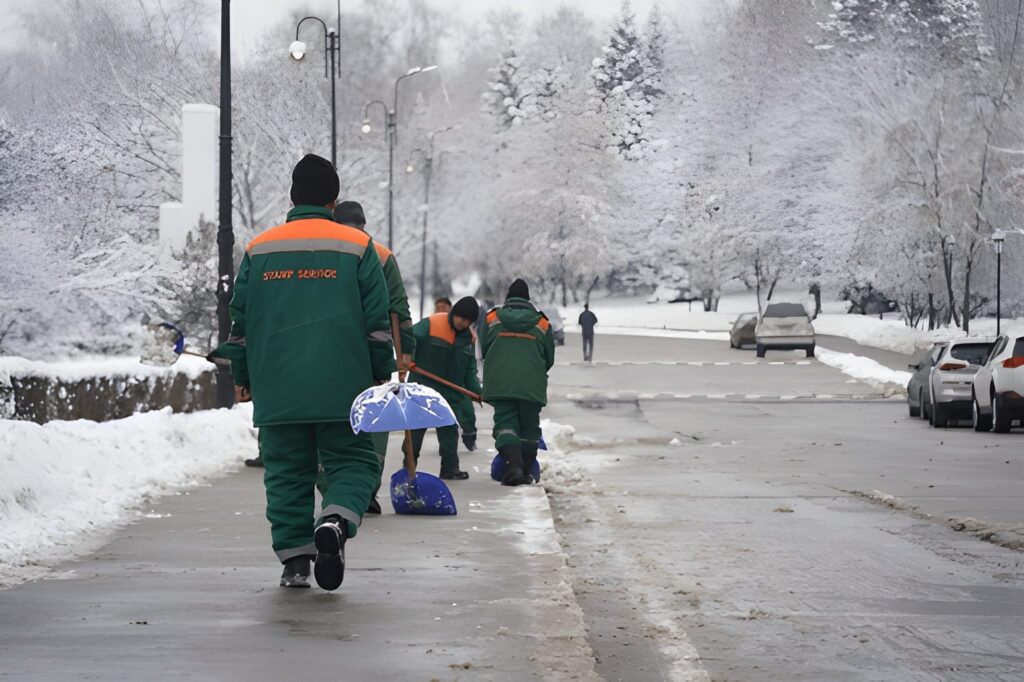
Sidewalks and entrances are often the highest-risk zones in commercial snow and ice management. Curb cuts, stairs, ADA pathways, and loading areas see the most slips and falls. OSHA advises that snow removal services prioritize these spaces with timely plowing, sidewalk clearing, de-icing, and ice removal.Parking Lots & Ramps: Traffic + Pedestrians
Parking lots and ramps present unique challenges for snow and ice removal because they serve both vehicles and pedestrians. Distinct Levels of Service (LOS) and frequent patrols are essential to manage hazards like shaded zones, refreeze from piled snow, and high-traffic areas where people walk between vehicles. According to SFM Mutual Insurance, a significant share of winter slip claims originates in parking lots, making them one of the highest-risk zones for property owners.The Numbers: Winter Risk by the Data
- BLS data: In 2017, the U.S. Bureau of Labor Statistics reported 1.8 injury cases per 10,000 workers due to ice, sleet, or snow, down from 3.9 in 2014. (Source: BLS Data).
- NSC macro risk lens: The National Safety Council notes that snow and ice events significantly increase weather-related injuries and deaths, with thousands of preventable incidents each year. (Source: CMR Risk and Insurance Services).
- Insurance benchmarks: SFM Mutual Insurance Company reports that the average winter slip-and-fall claim costs $50,000–$55,000, primarily due to icy sidewalks and walkways. (Source: SFM Mutual Insurance Company).