

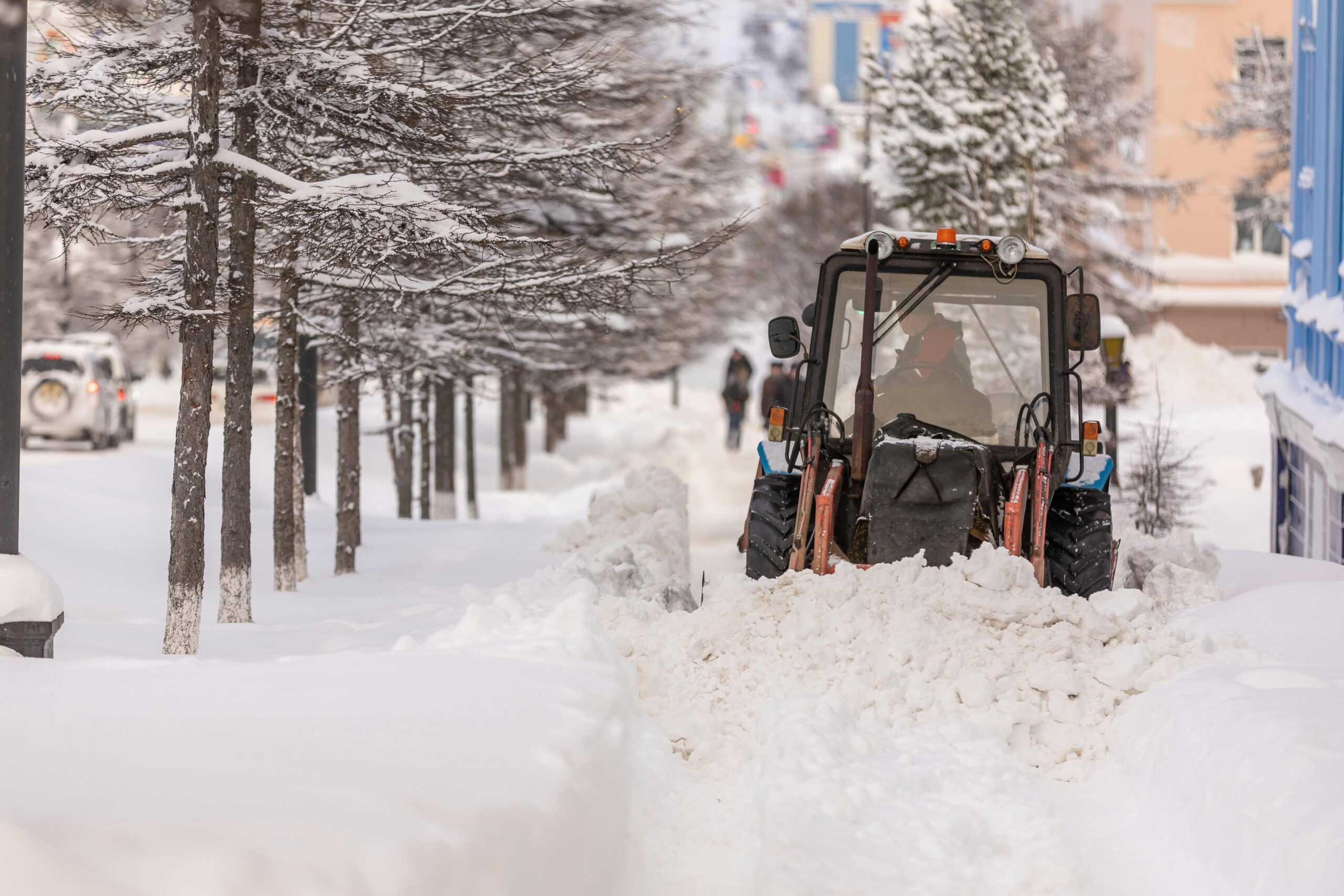
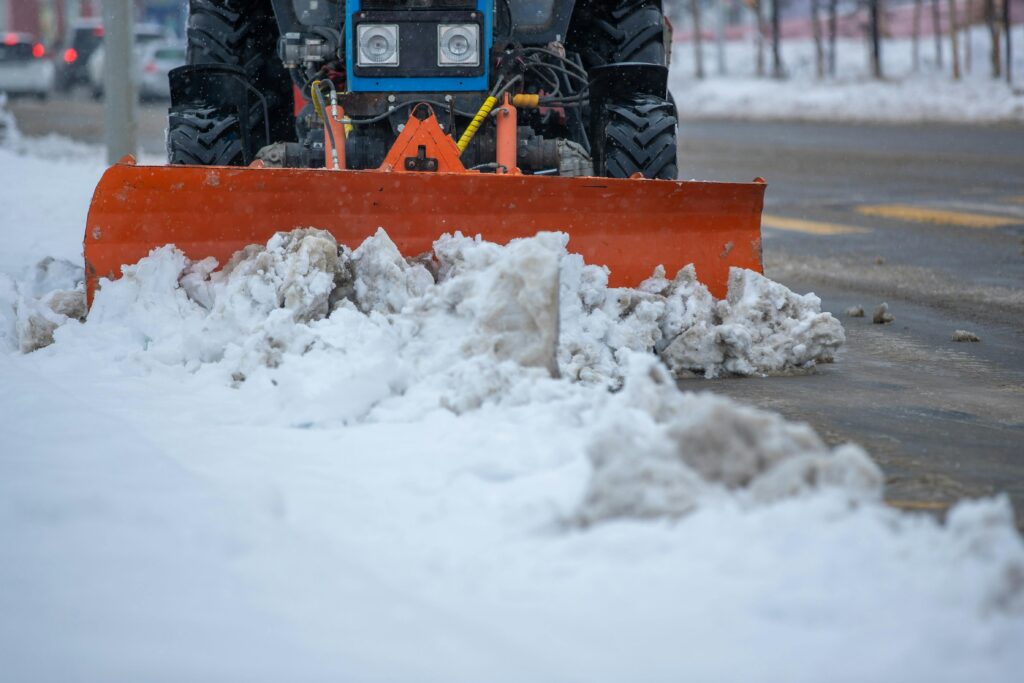
When it comes to clearing snow from sidewalks, using the right commercial sidewalk snow removal equipment, like snow blowers, sidewalk plows, and compact machines, is essential. These tools are designed to handle the demands of commercial properties, where larger areas and higher risks make professional snow removal services a must. Unlike residential snow clearing, commercial snow removal requires efficiency and speed to ensure safe and accessible walkways, protecting against slips and lost revenue due to unsafe conditions.
Professional snow removal services depend on the right equipment to effectively remove snow, minimize downtime, and ensure accessibility throughout the winter months. With snow and ice often piling up quickly, using top-tier tools helps businesses stay operational and keeps pedestrians safe, all while saving time and reducing liability. This blog provides informed guidance on how business owners and property managers can ensure their commercial properties stay safe and accessible during the winter months, avoiding disruptions and liability.
Notes from research:
Key Takeaways
- Effective snow management with professional equipment ensures quick and efficient clearing, reducing slip-and-fall risks and minimizing downtime.
- Timely snow and ice removal is essential to meet local regulations and avoid legal liabilities, ensuring safe walkways for employees and customers.
- Investing in the right equipment and services reduces labor costs and increases operational efficiency, allowing businesses to maintain accessibility during harsh winter conditions.
Why Professional Snow Removal Matters for Commercial Properties
Hiring a reliable snow removal service ensures quick and efficient clearing, minimizing risks like slips and falls, and preventing snow accumulation. With the right equipment, businesses can keep their property safe and accessible, avoiding costly accidents and ensuring smooth operations.Winter Slip‑and‑Fall Risks for Businesses
There is a significant increase of the risk of slip‑and‑fall injuries, especially on snow‑ and ice‑covered sidewalks and walkways. According to EMC Insurance, nearly half of all slip and fall injuries occur between December and March in the winter season, and the average medically treated slip‑and‑fall injury costs over $13,000 in claims and medical expenses. Proactive snow and ice management is essential for protecting pedestrians, reducing costly insurance claims, and keeping businesses safe and accessible throughout the winter season.Liability and Compliance Pressures
When sidewalks aren't cleared properly, pedestrians are at risk of injury, and injured parties may pursue legal claims against the business responsible for maintaining the walkways. In Minnesota, many cities require property owners to remove snow and ice from sidewalks within a set timeframe — for example, Minneapolis mandates clearing sidewalks within four daytime hours after snow stops, and other cities like Saint Paul and require removal within 24 hours of a snowfall. Failing to comply with these municipal ordinances not only creates unsafe conditions but can also result in fines, special assessments, or costly insurance claims for businesses held responsible for unsafe sidewalks. Trained crews have the expertise to handle different snow and ice conditions, including wet snow and compacted ice, with snow removal equipment designed for commercial use. At TCOS, our experts use tools that are built to handle large areas efficiently, ensuring that sidewalks, parking lots, and walkways are cleared of snow and ice without causing damage to the property.What Commercial Sidewalk Snow Removal Equipment Includes
Here's a comparison table outlining key commercial sidewalk snow removal equipment and their best use cases:|
Equipment |
Primary Function |
Best Use Case |
|
Sidewalk Snow Plow |
Clears snow quickly |
Long, wide pathways |
|
Walk-Behind Snow Blower |
Precision clearing |
Tight spaces |
|
Power Broom |
Debris/packed snow removal |
High pedestrian areas |
Key Benefits of Using Professional Equipment
- Quick snow removal: Ensures large areas are cleared quickly, minimizing downtime.
- Ice prevention readiness: Equipment can be paired with salt spreaders for proactive ice management.
- Precision near buildings/obstructions: Tools like the walk-behind snow blower allow for detailed snow removal in tight spaces, reducing risks near structures.
Key Benefits of Using Professional‑Grade Snow Removal Equipment
Enhanced Safety and Reduced Liability
- Faster and Thorough Snow Clearing: Commercial snow removal services clear snow efficiently, reducing the time it sits on sidewalks and improving snow conditions, which lowers the chances of slips and falls.
- De-Icing Integration: Professional equipment can be paired with de-icing tools to manage snow and ice effectively, improving safety and providing peace of mind for pedestrians.
- Reduced Liability: Using professional services ensures a reliable snow removal process, minimizing accidents and protecting businesses from costly slip-and-fall lawsuits while helping to ensure safety.
Operational Continuity
- Customer and Employee Access: Professional snow removal services keep sidewalks and entryways clear, ensuring safe access for customers and employees during snowfalls.
- Minimized Disruption: Effective snow management prevents snow piles and ice hazards, maintaining smooth operations in retail or office environments.
Time and Labor Efficiency
- Professional Equipment vs. Manual Gear: Commercial snow removal services with professional-grade equipment, like snow blowers and plows, clear large areas quickly, saving valuable time compared to manual gear.
- Labor Savings: Effective snow management reduces labor costs by requiring fewer staff to handle snow removal, allowing professionals to clear more ground with less effort and fewer resources.
Compliance With Local Codes
- Timely Snow and Ice Removal: In cities like Minneapolis, businesses must clear sidewalks within four hours after snowfall to avoid fines and penalties, ensuring safe and accessible walkways.
- Avoiding Legal Liabilities: Using professional snow removal services helps businesses comply with local codes, preventing costly fines, special assessments, or lawsuits due to uncleared snow and ice.
Snow Removal Safety: Best Practices for Professionals
Pre‑Shift Safety Protocols (Before Equipment Use Starts)
- Clear walkways and mark obstacles: Ensure all walkways are free of debris and clearly marked to prevent tripping hazards before starting snow removal.
- Inspect machines: Check all equipment components, including blades, augers, and guards, to ensure they're in proper working condition to avoid accidents and breakdowns during operations.
During Snow Removal Operations
- Maintain safe walking surface widths: Ensure pathways are cleared to a safe and accessible width for pedestrians to navigate without risk.
- Use anti‑icing: Apply anti-icing agents during active snow events to prevent ice buildup and improve traction for pedestrians.
- PPE checklist: Ensure all personnel are wearing the proper PPE, including boots, gloves, and high-visibility wear for safety in low-visibility conditions.
Ice Control and De‑icing: Improving Pedestrian Safety
You can learn how effective ice control and de‑icing methods can prevent ice buildup, ensuring safer walkways and reducing slip risks for pedestrians.- Liquid anti‑icers vs. granulated salt: Liquid anti‑icers work best for pre-treating surfaces before a snowstorm to prevent bonding, while granulated salt is more effective for melting snow after the storm, though it's less effective in very low temperatures.
- Safe selection of chemicals to protect concrete and landscaping: Choose calcium magnesium acetate or potassium acetate for sensitive surfaces, as these options are less corrosive and help protect concrete, stone, and landscaping.
- Frequency and timing of de‑icing applications: Apply anti-icing chemicals before the snow starts to prevent bonding, and reapply de-icers after snow accumulation to manage ice buildup effectively.
| Agent | Melting Temp / Effective Range | Best Use |
| Sodium chloride (rock salt) | Effective down to ~15°F (-9 °C) before performance drops significantly, and generally works best above this range. (PCA Minnesota) | Cost‑effective and widely used for general snow and ice conditions on sidewalks and walkways. |
| Calcium magnesium acetate (CMA) | Effective around 20°F (~‑7 °C); designed more as an anti‑icing/pre‑treatment product and gentler on surfaces. (PCA Minnesota) | Surface‑sensitive areas (e.g., concrete, landscaped zones) where corrosion and environmental impact are concerns. |
- Sodium chloride (rock salt) lowers the freezing point of water, melting ice effectively when temperatures are above about 15°F; below that, its melting rate slows dramatically. (PCA Minnesota)
- CMA is less corrosive and more environmentally friendly, making it preferable in areas where surface protection and reduced chloride runoff are priorities, though it generally performs best in moderate winter temperatures rather than deep cold. (stormwater.pca.state.mn.us)
How to Choose the Right Equipment and Service Provider
For Facility Managers
When selecting the right equipment for snow removal, consider these factors:- Equipment capacity: Ensure the equipment can handle the sidewalk length and traffic volume of your property.
- Turnaround time expectations: Set clear expectations for how quickly snow should be cleared after a storm to ensure safety and accessibility.
- Local climate patterns: Choose equipment that's best suited for your region's snow and ice conditions, such as heavy snowfall or wet snow.
For Service Contracts
When reviewing service contracts, make sure to evaluate the following:- Response times during snow events: Ensure the provider guarantees quick response times, especially during heavy snow events.
- Included equipment types and liability coverage: Verify what types of snow removal equipment are included and ensure the contract covers liability in case of accidents or property damage.