




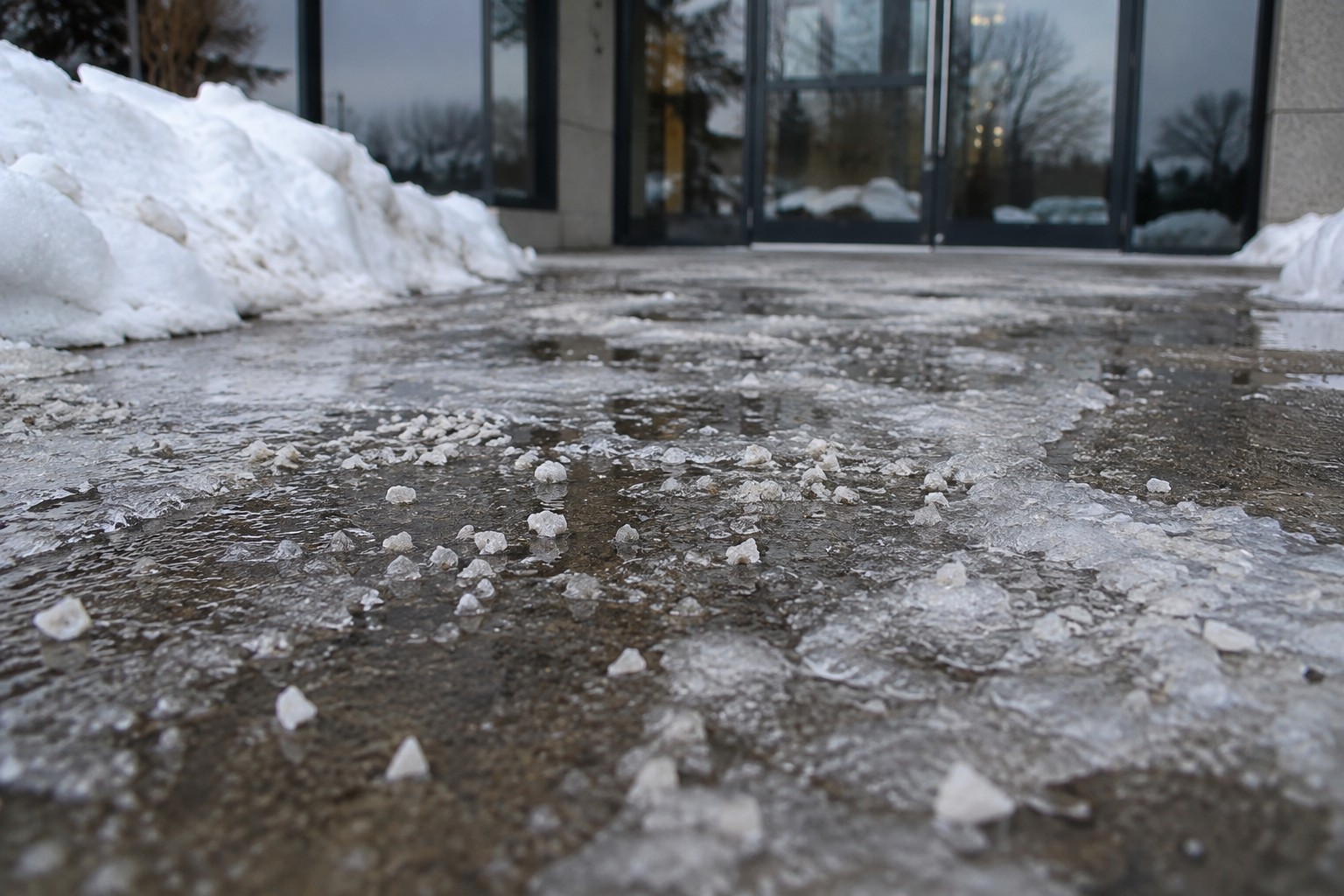
Snow plowing looks simple from the parking lot. A truck or loader shows up, the snow moves, and the lot opens. On a commercial property in the Twin Cities, the work behind that result is planned months ahead: trigger depths, route order, where the snow goes, what happens when a storm runs past the morning rush, and how every visit is documented. This guide explains how commercial snow plowing works across Minneapolis, St. Paul and the surrounding metro, and what a property manager should expect from a contractor over a full winter.

What is commercial snow plowing?
Commercial snow plowing is the scheduled removal of snow from parking lots, drive lanes, loading docks, entrances and sidewalks on business properties. It is unlike residential plowing in scale, timing and accountability. A commercial lot has to be open before tenants, employees and customers arrive, emergency lanes and fire access have to stay clear, and the property owner carries the liability if someone falls.
On most commercial sites plowing is one part of a winter program that also covers sidewalk clearing, ice management, snow relocation and documentation. Plowing moves accumulation. The rest of the program keeps the surface safe after the plow has left.
What is a trigger depth, and why does it matter?
A trigger depth is the amount of snow that starts a plowing visit, commonly one to two inches on commercial lots. It is written into the service agreement so both sides know when crews are dispatched without a phone call. A lower trigger keeps lots cleaner and reduces packed snow that turns into ice. A higher trigger means fewer visits but more snow on the pavement between them.
The right trigger depends on how the property is used. A medical building or retail center with early traffic usually needs a lower trigger than a warehouse with a single shift. Sidewalks and entrances often get a zero-tolerance standard even when the lot has a higher one.
How does plowing work during a long storm?
Twin Cities storms often last longer than a single overnight push. When snow keeps falling, crews plow in passes instead of waiting for the storm to end, so accumulation never gets deep enough to close the lot. The first pass opens drive lanes and fire access. Later passes widen the cleared area, clear parking stalls and push snow back from curbs and islands. A final cleanup pass after the storm squares off the lot and clears what traffic packed down.
Route order matters during a long event. Properties that open earliest, and the parts of each site that matter most, such as entrances, accessible stalls and loading docks, are sequenced first.
Where does the snow go?
Snow storage is one of the most overlooked parts of commercial plowing. Piles placed in the wrong spot block sight lines, take parking stalls, bury catch basins and melt across walkways where the water refreezes overnight. A good plan sets storage areas before the first snow: on the low side of the lot, away from entrances and drains that must stay open, and where meltwater can run off without crossing a walk.
After a heavy season, piles can outgrow the space. Snow relocation, using loaders to stack piles higher or haul snow off site, returns parking and keeps storage from creating ice problems in late-season/beginning of spring.
What equipment is used on commercial properties?
Equipment is matched to the site. Wheel loaders with pusher boxes clear large open lots quickly and stack snow. Plow trucks handle drive lanes and smaller lots. Skid steers and compact equipment work around islands, docks and tight corners. Sidewalk crews and walk-behind equipment clear entrances and walks, where most slip-and-fall claims start.
The key is whether the contractor has enough equipment, and enough crews, to service every property on the route within the time the agreement promises.
How does plowing connect to ice management?
Plowing and ice management work together. Plowing removes snow, but it leaves a thin layer that can bond to cold pavement. Pre-treatment before a storm makes plowing more effective, and de-icing after the last pass keeps that thin layer from turning into ice overnight. On commercial properties the two are usually written into the same agreement so the timing is coordinated.
What should documentation look like?
Every visit should leave a record: when crews arrived, what was cleared, what was applied and when they left. GPS-tracked, timestamped service logs protect the property owner if a slip-and-fall claim occurs, and they give property managers who oversee sites from a distance a clear view of what happened during each storm.
What should a commercial snow plowing agreement cover?
- Trigger depths for the lot and for sidewalks and entrances.
- Service windows, including when the lot must be open.
- Priority areas such as entrances, accessible stalls, fire lanes and docks.
- Snow storage areas and when relocation is triggered.
- Ice management scope and how it is coordinated with plowing.
- Documentation that is provided after every event.
- Communication: who to call during a storm and how quickly they respond.
How do you tell a strong plowing contractor from a weak one?
Ask how many properties are on each route and how long a full route takes during a heavy storm. Ask who your contact is at three in the morning. Ask to see a sample service log. Ask whether the same crews work your property all year or whether winter staff are seasonal hires. A contractor that works commercial properties year round knows the site, its drains, its curbs and its problem areas before the first snow falls.
Frequently asked questions
When should a commercial property line up snow plowing? Most commercial snow agreements in the Twin Cities are set long before winter starts, so routes, equipment and storage plans are in place before the first event. If your property does not have a plan yet, start now rather than after the first storm.
Do sidewalks get cleared at the same time as the lot? They should be sequenced so entrances and main walks are clear when the building opens. Many agreements hold sidewalks to a stricter standard than the lot.
What happens if it snows during business hours? Crews work around traffic, keeping drive lanes and entrances open, and complete a full cleanup once the lot empties or the storm ends.
Does plowing damage pavement or curbs? Careful operators and properly set equipment limit damage. Marking curbs, islands and drains before the season helps crews find them under snow.
Planning winter on a Twin Cities commercial property
Good snow plowing is planned, not improvised. Trigger depths, route order, storage areas, ice management and documentation decide whether a lot is open and safe first thing in the morning. TCOS has provided commercial snow and ice management across the Twin Cities metro for 30 years, with year-round crews who know each property. You can see how we run plowing on our commercial snow plowing page, and the full scope on our commercial snow and ice services page.
Talk to TCOS about your property
Ready to plan the season? Contact TCOS, email [email protected] or call 763-235-2400.