

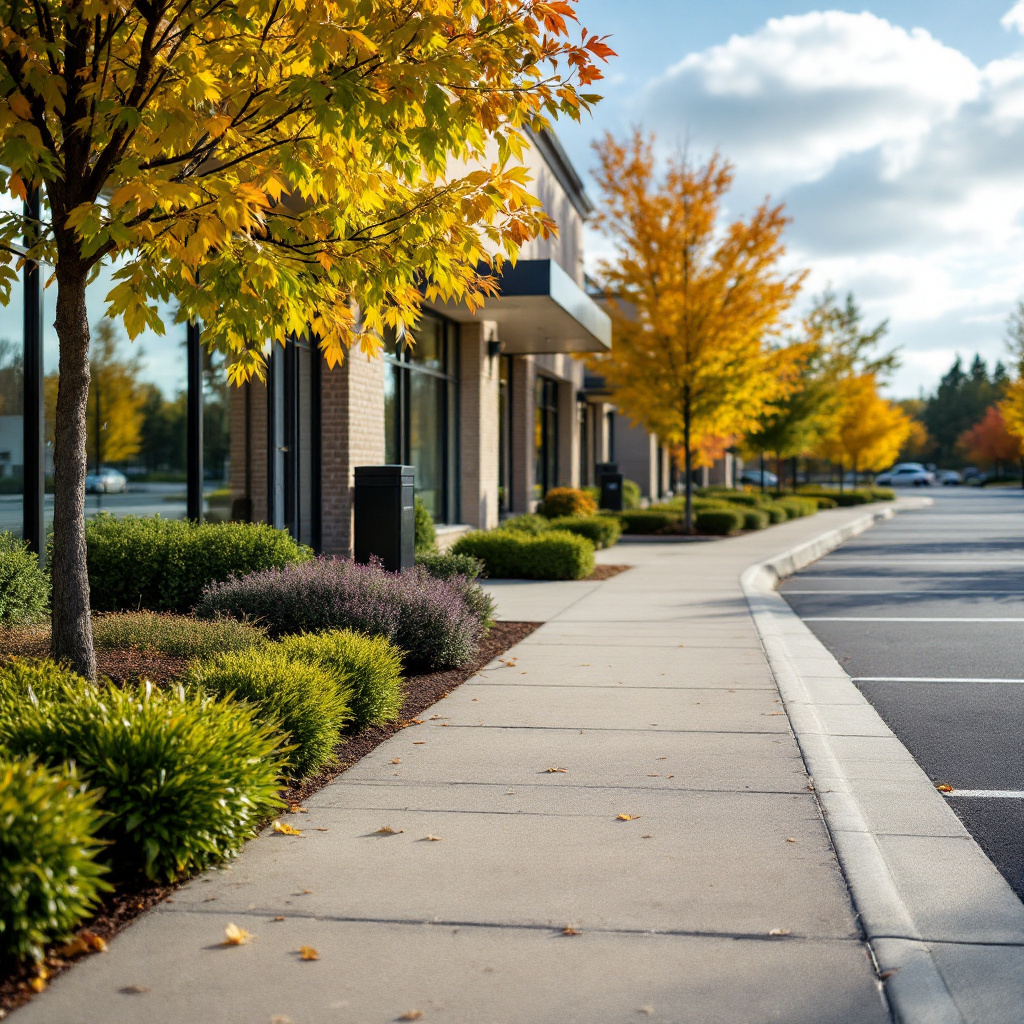

That dipped slab by your building's front door does not just look bad. It is a trip hazard, raises the odds of a slip claim on your property, and impacts your property's first impression. When it comes into view, many facility managers assume the whole slab has to go, and the first instinct is often to tear the slab out and start over. More often than not, that is the most expensive route, and not always the right one.
Most settled slabs are not broken. They have simply lost the soil support underneath.
This guide explains concrete leveling versus replacement in plain terms, without the sales spin. You will learn how each method works, what they cost in money and downtime, and how to tell which slab can be saved and which one needs to go. The goal is a clear decision, not a pitch for one service over another.
Key Takeaways
- Most slabs sink because the soil below shifted, not because the concrete itself failed.
- Leveling is faster and cheaper for sound slabs; replacement fits concrete that has truly broken down.
- A professional assessment of the slab and soil is the only dependable way to choose.
The Real Reason Slabs Sink Around the Twin Cities
Here is the part that most articles skip. A level slab that drops is usually fine on its own. The trouble is the ground that stopped holding it up.
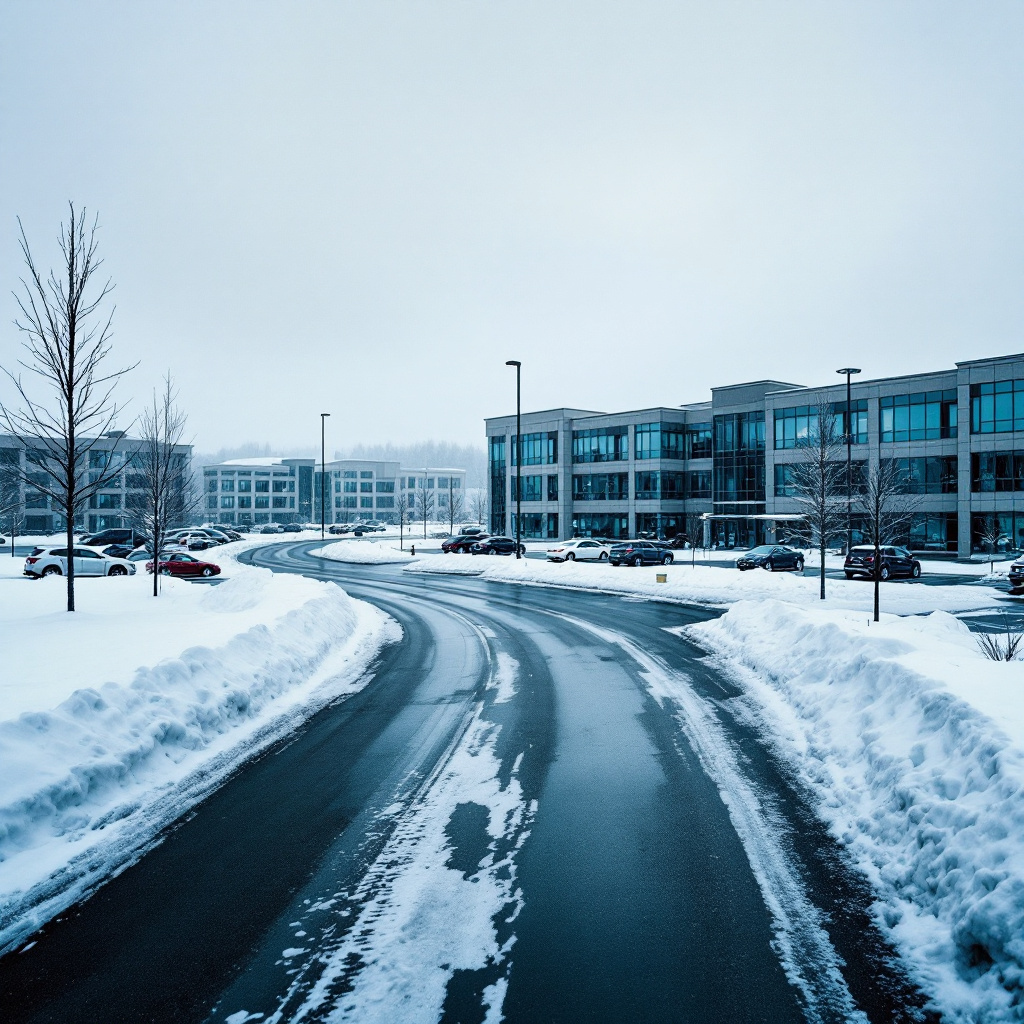
Minnesota winters make this worse than almost anywhere. Water in the soil freezes, swells, and forms ice lenses that push the slab upward in a process called "frost heave." Come the thaw, the soil contracts and leaves empty pockets behind. The slab then drops into those gaps, often in an uneven way. That cycle is repeated over several winters, causing a smooth, flat surface to become a hazard.
How deep does this reach? Across the Twin Cities metro, the standard frost depth used for footings is 42 inches. That number shows just how far seasonal frost reaches under your concrete surfaces. Soil that deep freezes, expands, and settles year after year.
So what makes a slab sink or settle? It usually comes down to three things:
- Soil erosion or washout: Runoff carries away the fine material that supported the slab.
- Weak original compaction: Loose fill keeps settling and compressing under load long after the pour.
- Freeze-thaw voids: Repeated freezing leaves pockets that the slab eventually drops into.
Concrete Leveling: What It Actually Does
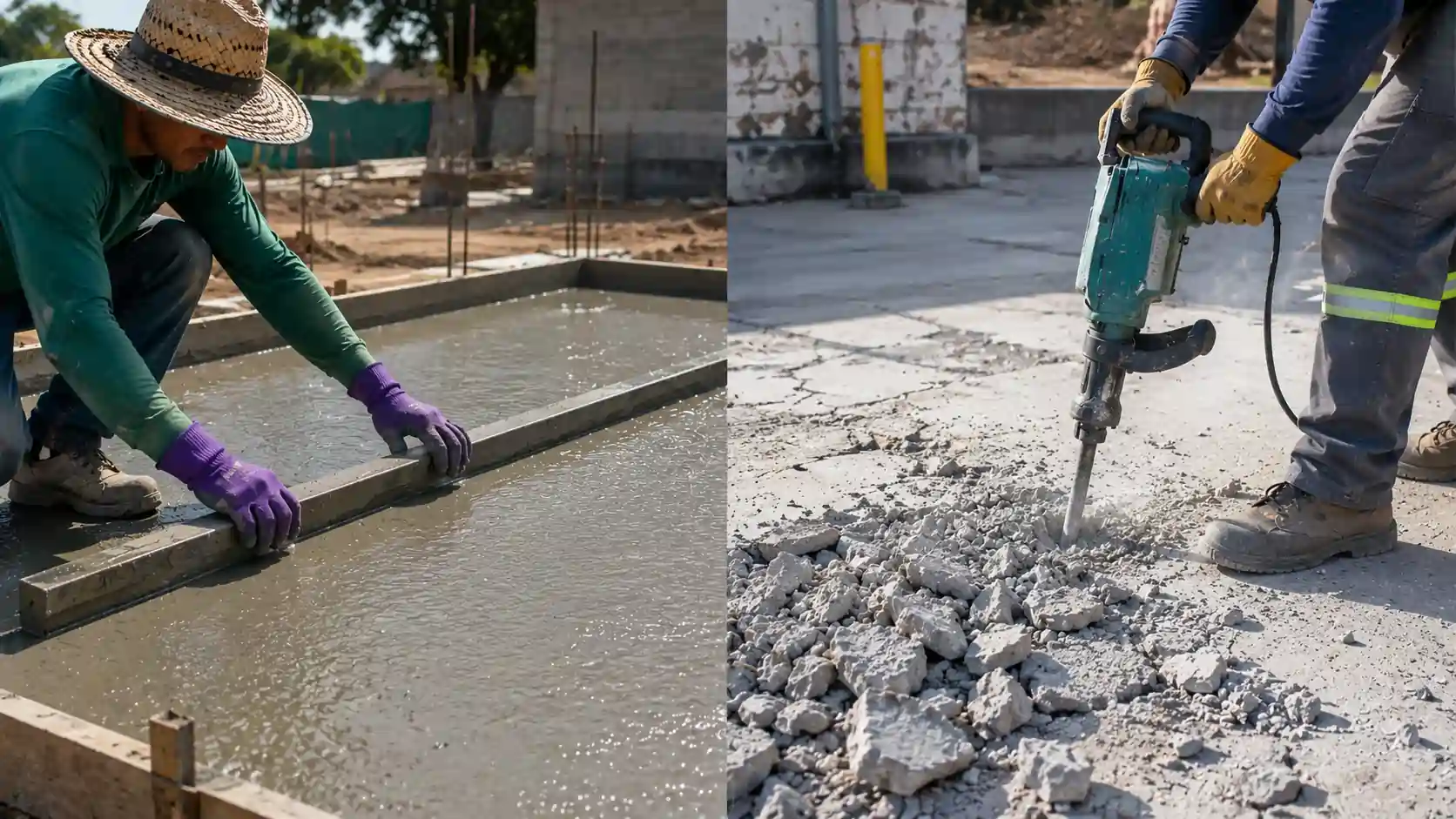
Concrete leveling lifts a sunken slab by injecting material beneath it to fill the empty space and raise the concrete back toward its original position. The slab itself never leaves. Crews simply rebuild the support under it.
You will hear about two professional methods to do this. The first, and older, one is mudjacking, also called slabjacking, which pumps a cement-based slurry under the slab. The newer approach uses polyurethane foam, sometimes called polyjacking. The foam is lighter, sets fast, and is injected underneath through small ports to raise the concrete. Both restore support and compact the ground in the process.
Since the work is done through holes about the size of a dime, lifting the concrete this way stays far less invasive than a full tear-out. Your landscaping, nearby slabs, and surrounding surfaces stay largely undisturbed. That matters greatly on an active commercial site where you cannot shut everything down or close off half the property for days.
One honest point. Leveling rebuilds the support and raises the slab, but it does not erase existing surface cracks. Those were already there before the lift, and lifting the slab will not make them vanish. A skilled crew can seal them to slow further damage, but if you want a flawless surface, raising the existing slab will not deliver it. Here is how TCOS approaches concrete lifting for commercial properties.
Concrete Replacement: What Pouring a New Slab Actually Takes
Concrete replacement is the full reset, starting over from scratch. The old slab gets broken out and hauled away, and a new slab is poured in its place. It is the bigger job, and both the budget and timeline reflect that.
The payoff? A true clean slate. Pouring new concrete lets you fix things the old slab never could, like a bad slope, poor drainage, thin sections, or missing rebar reinforcement. When a slab has genuinely broken down, replacement gives you a properly built surface from the ground up.
The tradeoff? Downtime. New concrete is usually solid enough to walk on inside 24 to 48 hours, but it does not reach full strength right away. Under the American Concrete Institute's curing guidance, concrete needs at least seven days of curing and reaches its full design strength near 28 days. For a walkway, dock, or drive lane that carries vehicle weight, that timeline is a real scheduling factor.
Is replacement the more permanent choice? For a slab that has failed, yes, but only when the slab truly needed replacing. Tearing out concrete that leveling could have lifted just spends money the job never required. The right answer depends on the slab's condition, which is why TCOS offers full concrete replacement alongside lifting rather than forcing one fix onto every project.
Concrete Leveling Vs Replacement: Cost, Time, and Disruption
Line them up next to each other, and the pattern is clear. Leveling beats replacement on cost, speed, and mess for slabs that are still sound, while replacement is the clear winner when you need a brand-new surface or a structural reset.
|
Factor |
Concrete Leveling |
Concrete Replacement |
| Relative cost |
Typically, a fraction of replacement (industry sources cite roughly 30 to 70 percent less) |
Highest cost: demolition, haul-away, and a new pour |
|
Time to reuse |
Often usable within hours |
24 to 48 hours to walk on, about 28 days to full strength |
|
Site disruption |
Minimal, small injection ports |
Heavy equipment, demolition, and debris |
|
Existing cracks |
Surface cracks remain |
New, crack-free surface |
|
Best suited for |
Structurally sound but settled slabs |
Crumbling, severely cracked, or unreinforced slabs |
The reason the concrete leveling versus replacement debate often tips toward leveling on price is simple. Replacement costs include demolition, hauling the old slab away, forming, new material, and the labor to pour it. Leveling skips all of that. For a commercial property, the time column matters just as much. Less downtime keeps tenants moving, parking open, and your exposure on an uneven surface measured in hours rather than weeks.
Reading the Slab: When to Level and When to Replace
Almost every decision between concrete leveling and replacement boils down to one question. Is the existing concrete slab structurally sound, or has it actually broken down? The two cases below cover most commercial slabs and should help you see where yours likely sits.
Choose Leveling When the Slab Is Sound but Settled
A sunken concrete slab that is still in one piece is the ideal candidate for concrete raising. So yes, you can level concrete instead of replacing it, as long as the concrete itself is in good shape. Look for these signs:
- The slab has minor to moderate settling, not widespread damage.
- Cracking is minimal.
- The real problem sits in the soil underneath, through erosion or voids, not the slab.
- The slab was poured with reinforcement and is fairly recent.
- Your main concern is a trip hazard or appearance, not structural failure.
When those boxes are checked, leveling your concrete slab restores a safe, even surface fast. On a commercial property, that means walkways, docks, and parking areas return to service quickly, with little disruption to daily operations.
Choose Replacement When the Slab Has Failed
Some slabs are sunken or uneven beyond saving. When the concrete itself has broken down, raising it only locks the damage in place. In such cases, replacing your concrete slab is the better option in the long term. Choose a replacement when you see these signs:
- Deep, widespread, or extensive cracking.
- Crumbling edges or surface spalling.
- No rebar or structural reinforcement in the slab.
- A need to redesign the slope or drainage.
- A very old slab carrying multiple problems at once.
The honest read is simple. Lifting sunken, cracked, and unreinforced slabs wastes money, since the cracks and the weakness come right back up with it. If the slab has failed structurally, a new pour is the better long-term solution.
Why a Professional Assessment Decides the Right Choice
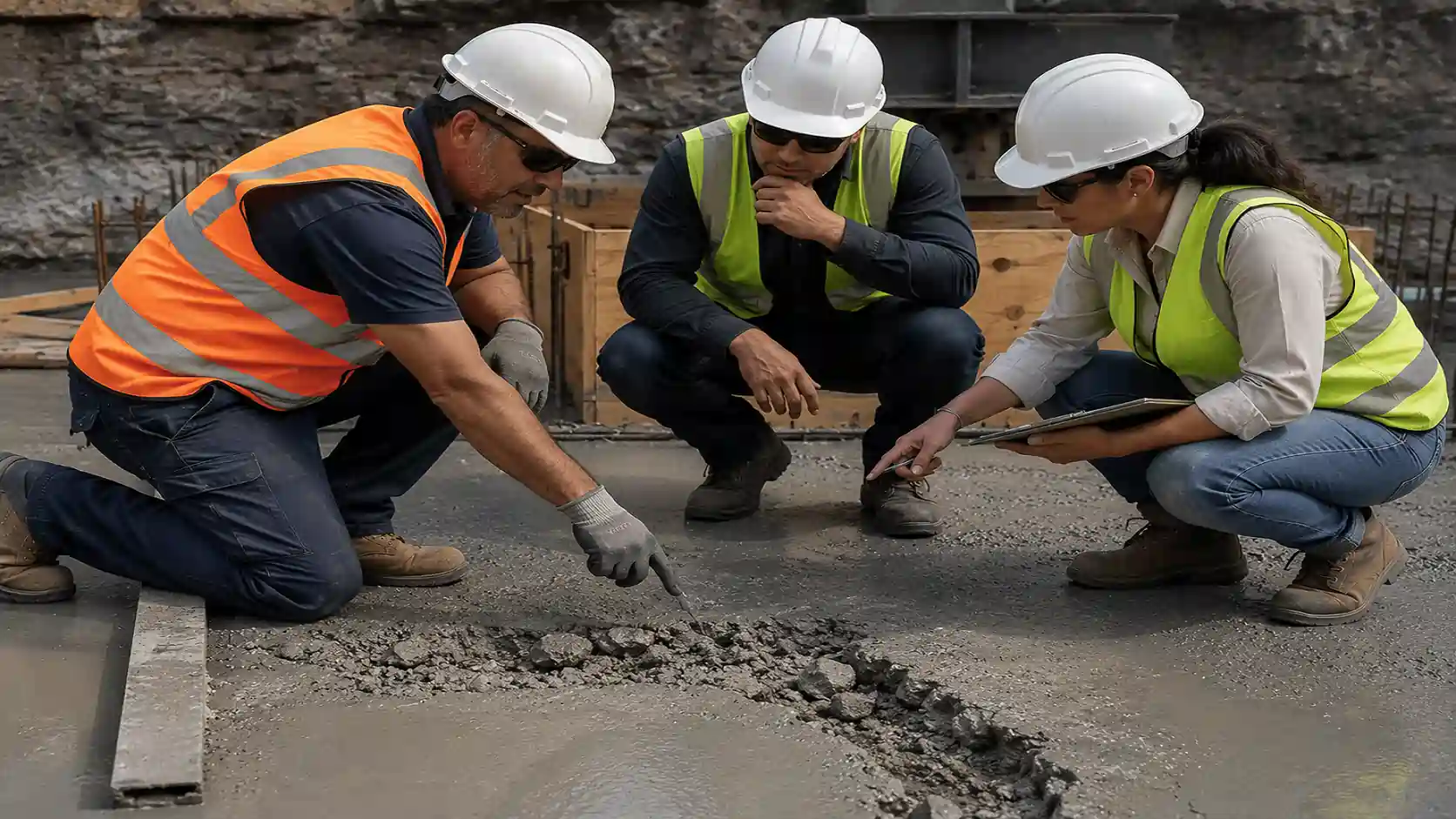
Matching the method to the slab means inspecting two things: the concrete and the soil under it. You cannot see the soil condition from the surface, and that is exactly what determines whether leveling will hold. This is why a professional evaluation beats a hunch.
So how do you decide? You bring in a contractor to assess it. A trained crew reads the crack pattern, checks for reinforcement, traces the cause of the settling, and judges the condition of the slab against the ground supporting it. A do-it-yourself call from the surface misses the details that matter most.
There is also a wrinkle that only experience catches. Cracks hidden on a slab's underside can become visible after a lift, and a professional will flag that possibility before any work starts, so there are no surprises. Get the call wrong, and you pay for it twice: a replacement you never needed, or a lift on a slab that should have been replaced. A professional assessment is how you avoid both. See the full range of TCOS concrete services to start there.
Three Decades of Know-How: Proven Experience on Minnesota Properties
TCOS has spent more than 30 years caring for commercial properties across Minnesota, and our concrete division handles both leveling and replacement in-house. That matters for one reason. Because we are not tied to a single method, the recommendation you get is based on what your slab needs, not on the only service a concrete leveling company happens to sell.
We also lead with restoration whenever it makes sense. Our surface restoration work can save clients up to 40 percent compared with full replacement on suitable surfaces, which protects your maintenance budget. As members of BOMA, SIMA, IREM, and IFMA, we hold our crews to current industry standards on every job. Explore our surface restoration options to see where that approach fits.
Frequently Asked Questions About Concrete Leveling Versus Replacement
Is concrete leveling cheaper than replacement?
In most cases, yes. Industry sources consistently put leveling well below the cost of replacement, often by a wide margin. The savings come from skipping demolition, haul-away, new materials, and the labor of a full pour. For a structurally sound slab that has simply settled, leveling delivers a safe, level surface for a fraction of a new pour.
How long does concrete leveling take?
A typical leveling job wraps up in a matter of hours, not days. Because the existing slab stays put and the work runs through small injection ports, there is no demolition or cure time to wait on. The surface can often be used again the same day, which keeps disruption to your property low.
Will leveling get rid of the cracks in my concrete?
No. Leveling lifts and re-supports the slab, but it does not remove existing surface cracks, which were already there before the lift. A professional concrete crew can seal them afterward to slow further damage and improve appearance. If a smooth, crack-free surface is the goal, replacement is the path to it.
How do I know if my slab needs replacement instead of leveling?
Widespread deep cracking, crumbling or spalling, and a lack of reinforcement all point toward replacement. Leveling suits slabs that are structurally sound but have settled because of soil issues. The only reliable way to know which describes your slab is a professional assessment that examines both the concrete and the ground beneath it.
How long before new concrete is ready to use?
New concrete is usually firm enough to walk on within 24 to 48 hours, but full strength takes longer. Following American Concrete Institute curing guidance, concrete needs at least seven days of curing and reaches full design strength at around 28 days. That is the window to plan around before heavy or vehicle loads return.
Why does concrete sink in Minnesota so often?
Minnesota's freeze-thaw cycles are the main reason. Water in the soil freezes, expands, and lifts the slab, then leaves voids when it melts. The slab settles into those gaps. With a 42-inch frost depth standard across the Twin Cities metro, frost reaches deep under local slabs, so settling is a predictable seasonal problem here.
Get the Right Concrete Fix for Your Property
The choice between concrete leveling and replacement is never one-size-fits-all. A sound slab that has settled is a fast, affordable lift, while a failed slab calls for a new pour, and only a close look at the concrete and the soil tells you which is which.
TCOS will assess your slab on site and recommend the option that fixes the problem without overspending. Call us at +1 (763) 235-2400 or request an assessment to find the right fix for your property.