





Catch basins include a grated and buried drainage box at a property to capture and remove surface water through connected pipes. It is an important fix in commercial sites that have standing water in parking lots, near foundations, and across walkways. These pools create serious slip hazards and eyesores for tenants and visitors, and headaches for property managers.
In this guide, we discuss how catch basin repair works on a commercial site, what the professional process looks like, and how routine maintenance can help optimize site drainage.
Key Takeaways
- A catch basin captures runoff at low points in a property and discharges it safely through pipes.
- Commercial catch basin repairs require load-rated materials, code compliance, and minimal site disruption.
- Regular maintenance such as grate clearing and sump cleaning keeps the drainage system working through every season.
What Does a Catch Basin Do for a Commercial Property?
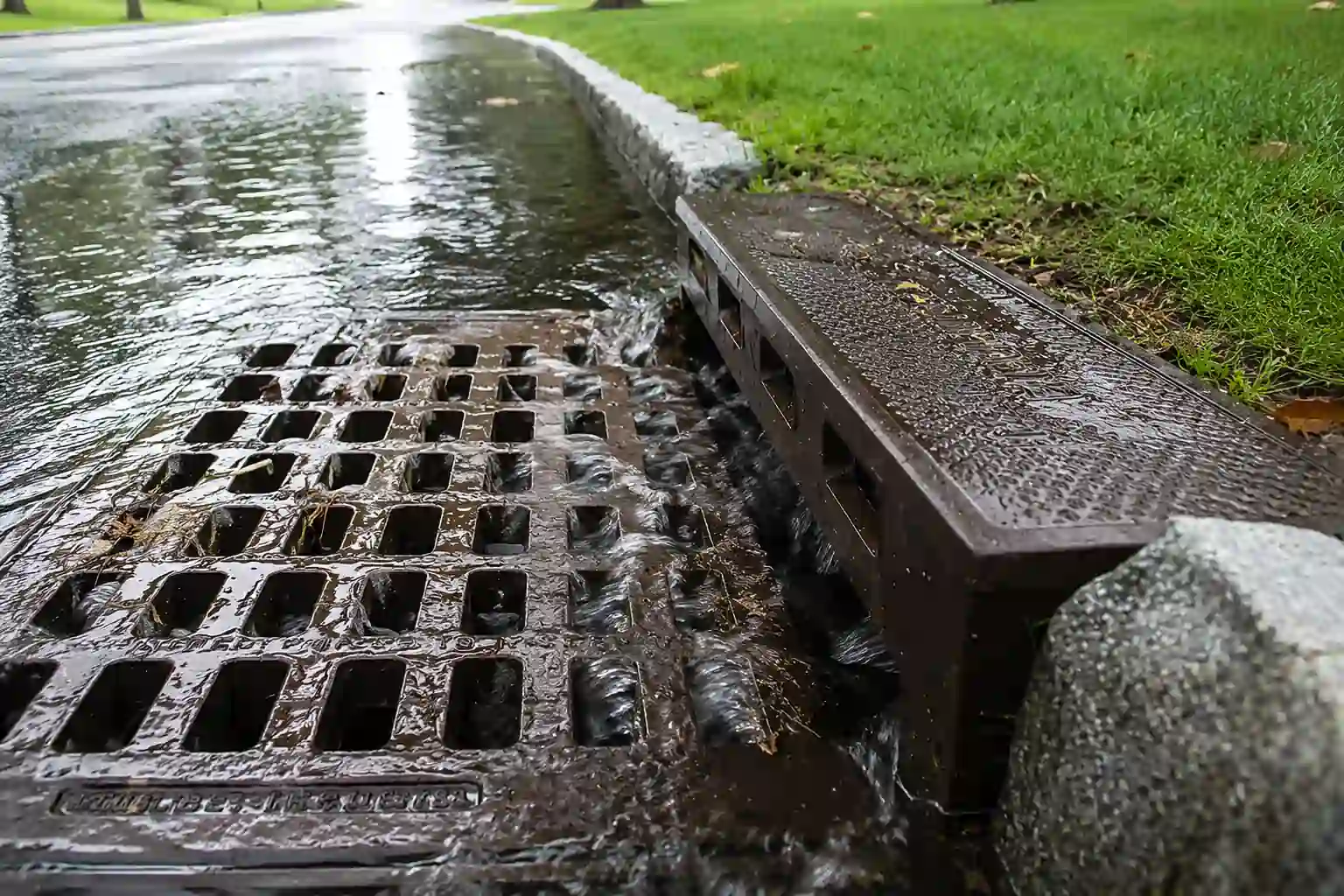
A catch basin is a buried and grated box that removes water collected on the surface through a low point and disperses it safely to local waterways through connected drainage pipes. It sits flush with the ground. The surface water drops through the catch basin grate and flows out toward a storm drain, a dry well, or an existing drainage system.
The purpose is simple. The basin protects your property from water damage by removing excess water before it can pool, erode soil, or reach the building foundations. On a commercial site, you find these basins where water naturally gathers:
- Low spots in parking lots and access drives
- The base of loading docks and ramps
- Near downspouts that dump roof runoff
- Edges of large paved areas where stormwater runoff collects
Each unit of a catch basin drainage system has some core parts. The grate sits on top of the basin and blocks large debris from falling into the drain pipe. The body holds the water. The sump is the chamber at the bottom of the basin where sediment settles. Finally, the inlet and outlet ports connect the pipes. Together, they prevent water from pooling and move it off your property in a controlled way.
Why Is Standing Water a Big Problem on Commercial Sites?
On a commercial property, poor drainage creates real liability. When you have standing water in a parking lot or on a walkway, it is a slip-and-fall risk for both tenants and visitors. That risk sits on the property owner. Even a small puddle near an entrance can turn into an injury claim and endless headaches.
Proper drainage solutions matter because water does not stay still. Rather, it spreads, seeps, and finds the lowest point, which is often a foundation or a pavement seam. If it is left alone, water damage compounds season after season.
Then there is the harder edge that Minnesota adds. Water that sits on pavement can freeze, expand, then thaw. This cycle cracks asphalt and concrete from the inside. At TCOS, we see the result every spring: cracked lots, heaved slabs, and crumbling edges that all trace back to poor water management.
There is an operational cost, too. When a drive lane gets flooded or entrances get blocked, it disrupts tenants, blocks deliveries, and interrupts the business that is conducted on site. Installing a drainage catch basin to manage drainage protects access and pavement alike. For surface damage that has already started, our surface restoration work addresses the cause and the result together.
How to Keep a Catch Basin Working After Repair?
The short answer: with routine care. Catch basin maintenance is straightforward, but it is not a task that should be done once in a while or when someone remembers it once or twice a year. Rather, on a commercial site, it belongs on a schedule that a service provider manages.The recurring work is short:
- Clear leaves and debris off the grate so water keeps flowing in.
- Remove sediment from the sump before it chokes the drain.
- Clean the basin seasonally, in spring and fall, ahead of peak water runoff.
- Inspect the pipe connections for shifting or blockage.
The frequency of cleaning a basin depends on the site. At minimum, you should plan for seasonal service, and add visits where heavy debris or rainwater loads the system faster. Watch for the warning signs that call for a professional look: water that lingers after a storm, a grate that clogs again right after clearing, or slow sitewide water drainage. Professional grounds maintenance services can keep this on a routine schedule so a small clog never grows into a flooded lot.
Don't Wait for the Next Storm to Find the Weak Spot
Water always finds the low point. The question is whether it drains away or sits there working on your pavement. A properly operating catch basin settles that question for good.
Protect your property before the next storm finds the weak spot. Call TCOS at 763-235-2400 or schedule a consultation to get started.
Frequently Asked Questions
What is the purpose of a catch basin?
A catch basin captures surface water at a low point and channels it through connected pipes to a safe discharge zone. It prevents pooling, erosion, and water damage by moving runoff off the property. On commercial sites, that protects pavement, foundations, and people.
Are catch basins required by code?
It depends on the municipality. Requirements vary, and many commercial projects, especially those connecting to a municipal storm system, trigger permits and stormwater compliance review. Always confirm local code before work begins. A contractor familiar with your area handles this review.
What is the difference between a catch basin and a French drain?
A catch basin captures surface water through a grate at ground level. A French drain collects subsurface water through a perforated pipe set in gravel. One handles water on top of the ground, the other below it. They often work together in one plan.
How often should a commercial catch basin be cleaned?
Plan for seasonal cleaning at minimum, in spring and fall. Each visit clears the grate and removes sediment from the sump so the basin drains at full capacity. Sites with heavy leaf fall, traffic, or debris need more frequent service to prevent clogs.
Can a catch basin connect to an existing drainage system?
Yes. Catch basins commonly tie into existing storm systems, dry wells, or French drains where local code permits. The connection should have a proper slope and use the right fittings for a watertight joint. Municipal connections usually require a permit, so confirm first.