


By late September, most Twin Cities property managers are still thinking about mowing schedules. By late October, the same properties are scrambling to find a crew before the first hard frost locks up the ground. The window between those two dates is short, and it is the single best opportunity of the year to protect a commercial property from winter damage while setting up a clean, fast spring.
This checklist covers what an experienced landscape and grounds team actually does during fall cleanup on a commercial property in the Twin Cities metro, in the order it needs to happen, and why skipping a step costs more in the spring than doing it now.
Why Fall Cleanup Timing Matters More Than the Task List
Most fall cleanup guides read like a chore list: rake leaves, cut back perennials, mulch beds. The task list is not the hard part. The timing is. In the Twin Cities, the useful fall cleanup window sits between the first significant leaf drop, typically early October, and the point where the ground starts to freeze overnight, usually mid-to-late November depending on the year.
Do the work too early and you are cleaning up more leaves twice. Do it too late and irrigation blowouts, aeration, and any planting or bed work become impossible once the ground firms up. Property managers who wait until the first snow event to think about fall cleanup have usually already missed the window for anything beyond leaf and debris removal.
The Twin Cities Commercial Fall Cleanup Checklist
1. Irrigation System Winterization
Irrigation lines left full of water when the ground freezes crack, and a cracked line is not visible until the system is turned back on in April, at which point a property is dealing with a flooded bed or a broken sprinkler head instead of a five-minute fix. Every zone needs a compressed-air blowout, not just a shutoff at the valve. This has to happen before a hard freeze, which means scheduling it in October, not waiting for a cold snap to remind everyone.
2. Leaf and Debris Removal
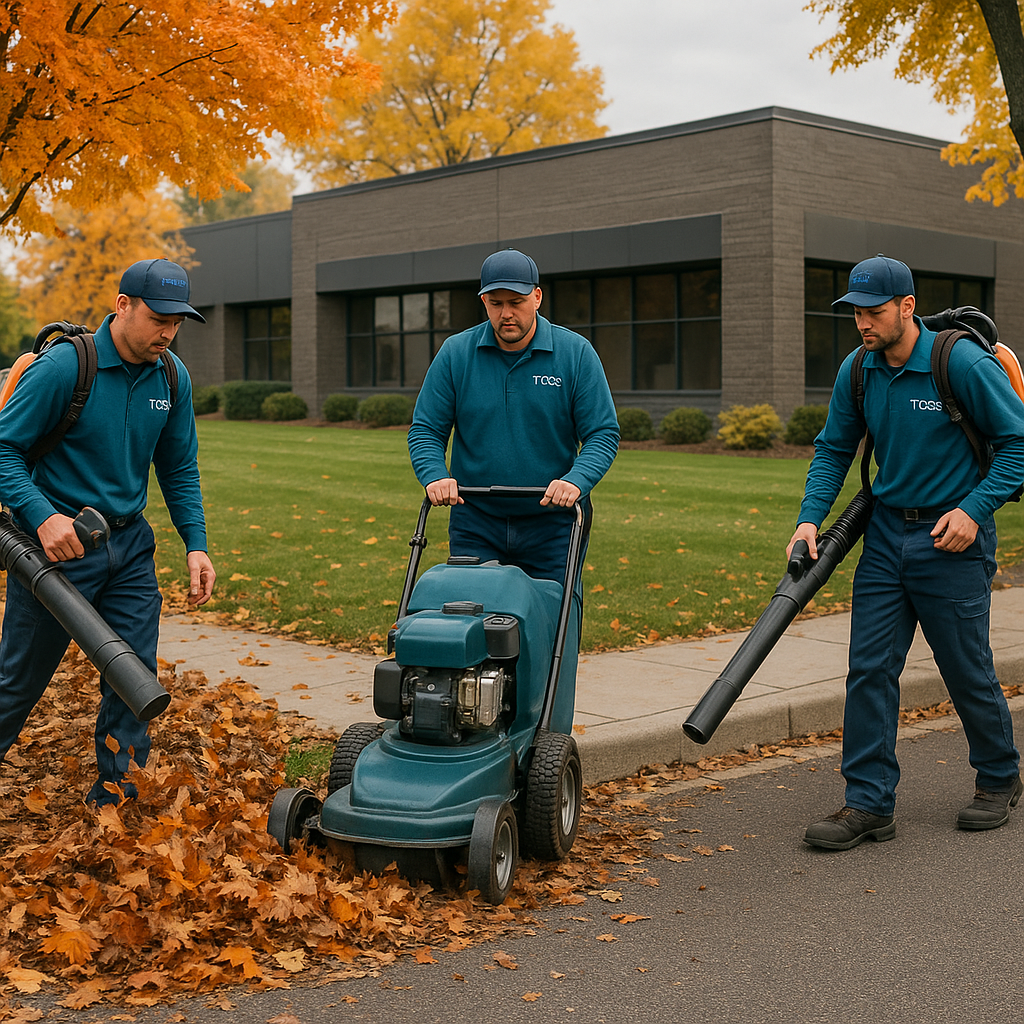
Leaves left on turf over winter smother grass and create dead patches that show up as soon as the snow melts. On a commercial property, this usually means multiple passes rather than one big cleanup, since large canopy trees keep dropping through late October. Debris removal also covers storm drains and catch basin grates, which brings us to the next item.
3. Catch Basin and Drainage Inspection
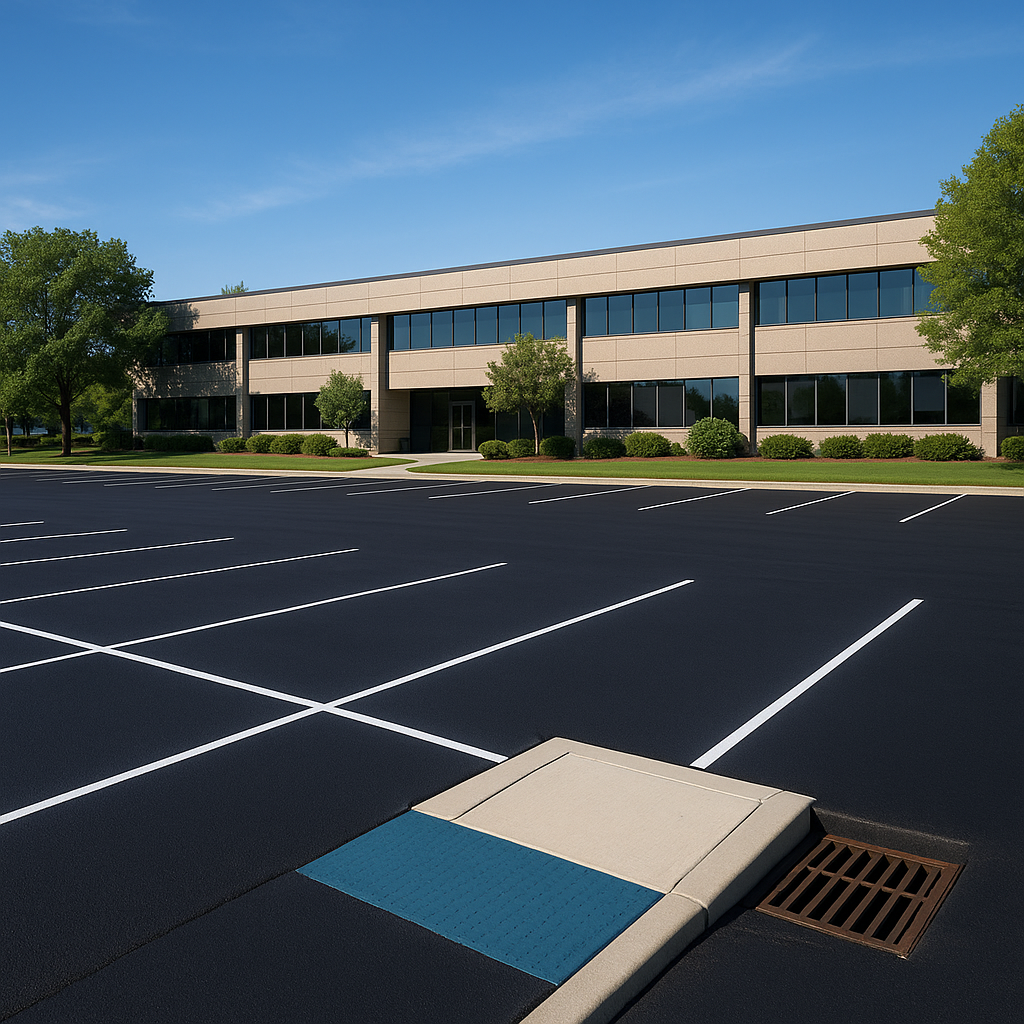
A catch basin buried under leaves and debris does two things badly: it lets water pool on the parking lot surface, and it hides freeze-thaw damage at the throat of the structure until it has gotten worse. Fall cleanup is the right time to inspect the surrounding concrete, rings, and grates for cracking or settling, before the first snow melt sends water somewhere it should not go. If a basin needs repair or replacement, this is also the last practical window to get concrete work done before temperatures make it impossible.
4. Perennial Cutback and Bed Cleanup
Most perennial beds on commercial properties benefit from a cutback once foliage has died back, both for appearance and to reduce the fungal and pest issues that come from leaving decaying plant material in place over winter. This is also the point to pull annuals, clean out beds, and apply a fresh layer of mulch, which insulates root systems through the winter and gives beds a head start in spring instead of a mud pit that needs full renovation.
5. Turf Aeration and Final Fertilization
Fall is the best time of year for core aeration and a final fertilizer application on cool-season turf, which is what covers the overwhelming majority of Twin Cities commercial properties. Aeration relieves the compaction that a summer of foot and vehicle traffic causes, and a fall fertilizer application builds root reserves that show up as faster green-up the following spring. Both need to happen while the ground is still workable, which again points back to an October timeline rather than November.
6. Tree and Shrub Inspection
Fall cleanup crews are already walking the property, which makes it the right time to flag any tree limbs that could become a liability once snow load and ice add weight, especially anything overhanging a walkway, parking area, or building entrance. Addressing a hazard branch in October is a pruning job. Addressing it in February, after it has come down on a car or a sidewalk, is a very different and more expensive conversation.
Why Fall Cleanup and Snow Season Planning Belong on the Same Calendar
Property managers who treat fall cleanup and snow contract planning as two separate projects usually end up managing two separate vendors, two separate walkthroughs, and two separate sets of miscommunication. The property gets walked once in October for cleanup and once in November for a snow contract, often by different companies that never talk to each other.
A single vendor who handles both sees the property once, in the same visit, and can flag a drainage issue that will matter for snow melt, a tree limb that will matter for ice load, or a section of parking lot surface that will matter for plowing before the season starts rather than after the first storm. This is the core argument for consolidating landscape maintenance, surface work, and snow removal with one team rather than three or four seasonal vendors who each show up, do one task, and disappear until next year.
| Fall Task | Deadline (Twin Cities Metro) | Cost of Waiting |
|---|---|---|
| Irrigation winterization | Before first hard freeze, typically mid-October | Cracked lines, spring flooding, full head replacement |
| Catch basin clearing and inspection | Before leaf drop is complete | Standing water, frozen surface damage, repair vs. replacement cost jumps |
| Aeration and fall fertilization | While ground is still workable, October | Slower spring green-up, compacted turf carries into next season |
| Perennial cutback and mulching | After foliage dieback, typically late October | Fungal issues, pest overwintering, harder spring cleanup |
| Hazard tree and limb assessment | Before ice and snow load season | Liability exposure, higher-cost emergency removal |
Frequently Asked Questions
When should commercial fall cleanup start in the Twin Cities?
Early October is the practical start for most properties, since it allows for multiple leaf removal passes as trees continue dropping through the month while leaving enough time for irrigation winterization, aeration, and bed work before the ground freezes.
Can fall cleanup and snow removal contracts be handled by the same crew?
Yes, and for a multi-service commercial property it is usually the better option. A single crew that handles landscape cleanup, surface maintenance, and snow removal sees the property in one walkthrough and can catch issues that a single-service vendor would miss entirely.
What happens if irrigation lines are not winterized before a freeze?
Water left in the lines expands as it freezes and cracks pipe, fittings, and sprinkler heads. The damage is not visible until the system is turned back on in spring, at which point a property manager is dealing with an active leak or a non-functioning zone instead of a scheduled blowout.
Is fall aeration worth it for a commercial property with heavy foot traffic?
It is often more valuable on high-traffic commercial turf than on residential lawns, since compaction from consistent foot and vehicle traffic is the primary reason turf thins out and fails to recover in spring without it.
TCOS has coordinated fall cleanup, surface maintenance, and snow season planning for commercial properties across the Twin Cities metro for over 30 years, with one team responsible for the property year-round rather than a rotating list of seasonal vendors. If your property needs a fall walkthrough before the ground freezes, schedule an assessment, or read more about our commercial landscape maintenance, concrete services, and commercial snow removal planning.