



Snow and ice control is crucial for commercial properties. It does more than just clear what's visible. It also helps to manage risk, access, and the flow of operations during harsh winter weather. For areas like large parking lots, sidewalks, and entrances, you need professional snow and ice removal and control with trained crews and specialized equipment working together as part of a planned winter operation. DIY efforts or limited in-house resources rarely keep pace with repeated snowfall, ice storms, or overnight freeze-thaw cycles. That's why professional snow and ice management has become essential for commercial sites. This is backed up by research; in North America, the commercial snow and ice management service market is expected to exceed $27 billion by 2030, reflecting how critical these services are for businesses operating through harsh winter months.
In this blog, we have discussed professional snow and ice management and control in great detail. By the time you reach the conclusion, you will know how to make the best decision for snow and ice removal services for your commercial property.
A professional agreement protects your business by outlining the scope of work, documenting service deliveries, and ensuring your property is always covered by experienced crews with the right equipment. Without this clarity, you risk being caught off guard by service gaps or unexpected charges.
Key Takeaways
- Professional snow and ice control is an organized commercial service, not a reactive task.
- To manage snow or ice at a large scale, you need trained removal crews and specialized equipment.
- Reliable winter management with skilled and qualified experts helps to keep commercial sites functional, safe, and accessible.
Commercial Snow and Ice Hazards: What's at Stake
Snow and ice don't just change how a property looks—they change how it functions. For commercial sites, unmanaged snow, icy sidewalks, and blocked parking lots quickly turn into safety risks, access problems, and operational headaches. Ice control and snow removal are not optional winter tasks; they are part of responsible winter operations that protect people, property, and business continuity. When snow or ice is not handled promptly and professionally, the consequences show up fast and often compound over time.Slip & Fall Liability and Legal Compliance
Slip-and-fall incidents remain one of the most common winter hazards on commercial properties. Why? Because icy sidewalks, entrances, and refrozen snow piles create hazardous conditions. These increase the risk of injury for a property's employees, tenants, and visitors. That is why many municipalities require commercial property owners to clear snow and de-ice sidewalks within specific timeframes after snowfall to prevent these accidents. If businesses and property owners fail to manage snow and ice before that time, it can lead to liability claims, code violations, and insurance complications, especially when certified snow professionals and documented storm response are absent.Challenges With Business Operations and Accessibility
Even if the snowstorm is light or moderate, it can still harm daily operations. This is because after a snowfall, areas like parking lots and entrances get blocked with snow. If these areas are not cleared properly, the snow piles reduce usable space. It also creates icy surfaces that increase the risk of slips and falls and injuries. As a result, foot traffic slows, and overall accessibility gets disrupted. With professional snow and ice management, property owners can ensure their sites remain clear and safe, no matter how much snow falls during a winter storm.
What "Professional" Really Means: Key Components of Expert Snow and Ice Control
In commercial settings, "professional" snow and ice control isn't a label—it's a standard defined by preparation, accountability, and execution at scale. Managing snow and ice across commercial sites requires more than reacting after a winter weather event. It means having trained people, the right equipment, and proven best snow removal and ice control practices in place before winter conditions create hazardous situations.A. Trained Teams & Safety Protocols
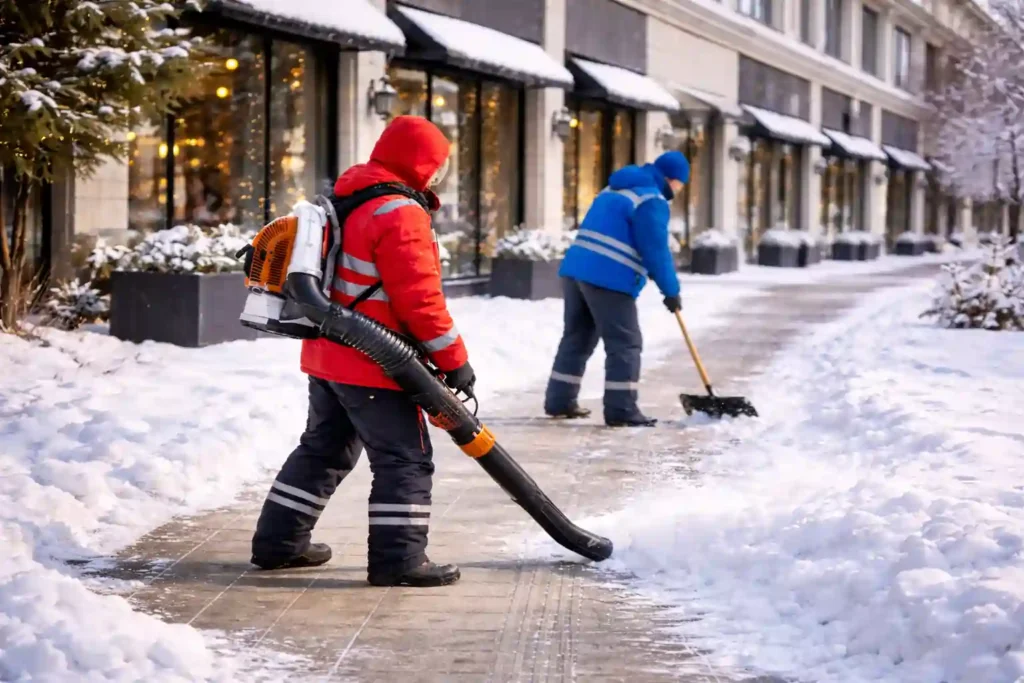
Proper snow professionals are not just your run-of-the-mill seasonal helpers who show up with snow gear.. They are highly skilled and trained crews who are qualified to lead and handle snow and ice operations throughout the winter season.- These professionals are trained to recognize hazardous conditions such as refreeze, drifting, and icy runoff
- They undergo ongoing continuing education on winter operations and safety
- Winter crews comply with OSHA guidelines and local municipal requirements
- They ensure documented storm response, site inspections, and client communication
B. Advanced Snow and Ice Control Equipment
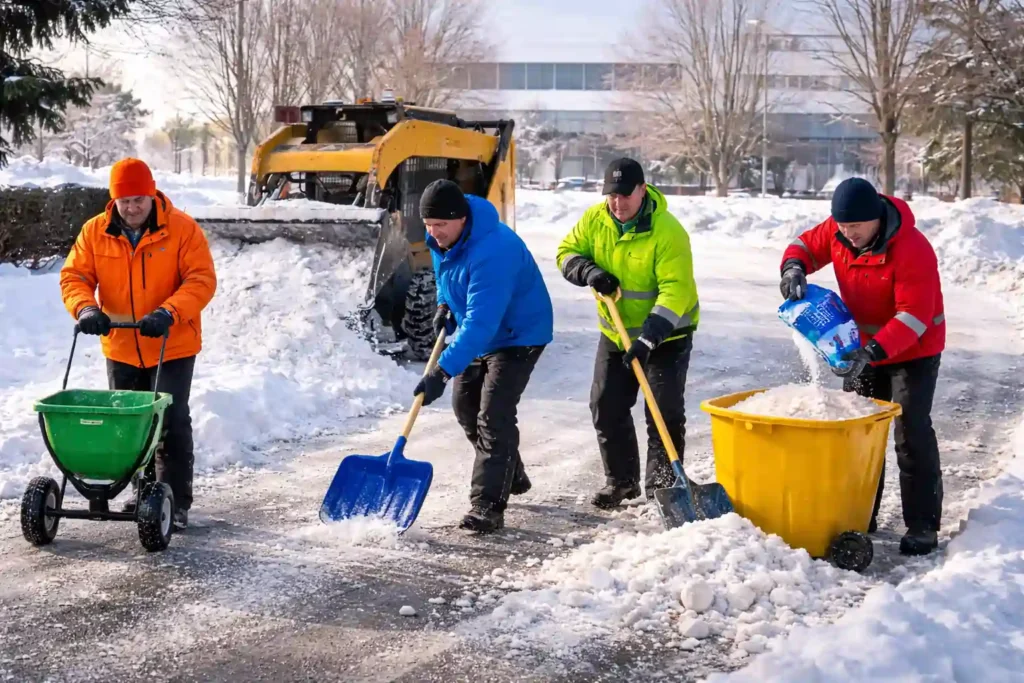
Commercial snow and ice control depends on an equipment arsenal built for efficiency and durability.- Heavy-duty snow plows, pushers, and skid steers configured for large parking lots
- Spreaders and salt spreaders designed to distribute de-icing materials evenly
- Snow hauling equipment to remove snow piles when space becomes limited
C. Integrated Ice Management
Ice control is where professional snow and ice management truly separates itself.- Pre-storm anti-icing using liquid treatments to prevent bond formation
- Post-storm de-icing and ongoing monitoring during freeze-thaw cycles
- Smart salting practices that optimize application rates and reduce environmental impact
Strategies Professionals Use for Effective Snow and Ice Management
Commercial snow and ice control isn't random or reactive — it's a set of deliberate, repeatable strategies shaped by weather patterns, winter severity, and property needs. Instead of waiting for snow to stop falling, professional teams manage risk with clear tactics that keep commercial sites clear and safe from the first flakes to the last thaw.Pre‑Storm Planning & Weather Monitoring
Smart snow and ice management begins long before snow touches the ground. Proactive teams monitor local weather forecasts and winter-specific models to anticipate storms, estimate snowfall totals, and track temperature fluctuations that affect ice formation. By watching conditions closely, professionals can time anti‑icing applications, stage crews, and ensure snow removal equipment is ready to go. This anticipatory approach reduces hazardous buildup while optimizing fuel costs and productivity.Prompt Snow Removal Response Times
Knowing how much snow has fallen is one thing — responding quickly is another. Professional services use predefined triggers (such as specific snowfall depths or ice formation) to deploy crews immediately. Quick plowing of parking lots, sidewalks, and high‑traffic routes helps prevent snow from compacting or turning icy, keeping walkways navigable and reducing slip and fall risks. Consistent response times create peace of mind for businesses through the winter season.Safe Ice Prevention & De‑icing Standards
Ice is often more treacherous than snow because it hides beneath surface layers, waiting to catch unsuspecting footsteps — or delay operations. Professionals blend smart salting techniques with liquid brine and calibrated distribution of de‑icing materials. This approach prevents ice from bonding to pavement and minimizes ecological harm, protecting landscape areas and stormwater systems. Here's how a typical winter operation unfolds:- Receiving weather alert
- Equipping and mobilizing the crew
- Applying anti‑icing treatments before a storm hits
- Snow plow parking areas and clear walkways
- Applying de‑icing materials as needed
- Post‑storm inspection and reporting
Professional Contracts and Service Agreements Matter
In the world of commercial snow and ice management, having a clear contract with a professional service provider is a critical step in ensuring your property remains safe, accessible, and compliant throughout the winter season. These contracts provide clarity around response times, service expectations, and liability coverage, helping property owners avoid confusion and mitigate risks during harsh weather. A well-defined seasonal contract or per-push model establishes parameters for snow removal based on specific weather conditions, which ensures that the property will always receive timely service. For example, seasonal contracts guarantee services through the entire winter season, while per-push agreements offer flexibility, triggered by actual snowfall events. Both approaches have their merits, but they each set clear expectations for costs and services. Here's why the right contract matters:| Contract Element | Why It Matters |
|---|---|
| Trigger Depth | Ensures consistent response at key snowfall levels |
| Response Time Guarantee | Minimizes hazard exposure and operational delays |
| Defined Service Scope | Prevents scope creep and reduces liability risks |
| Documentation and Logs | Provides proof of service for legal compliance |
Sustainability and Best Practices in Modern Snow and Ice Control
When a commercial site has to deal with snow and ice, you need more than just clear surfaces. You also need to ensure that the surrounding environment and landscape are protected. This can be tricky, since salt and other de-icing substances can seep into the soil, storm drains, and surrounding ecosystems when snow melts. To prevent such situations, professional snow and ice removal and management crews use smart techniques that strike a balance between environmental stewardship and safety. For instance, they use calibrated applications that match the amount of de-icing material to the severity of conditions, rather than relying solely on heavy rock salt. This lessens misuse without sacrificing the effectiveness of ice control, which is crucial in delicate locations near lawns, trees, and water features. Alternatives to conventional sodium chloride that are less harmful to the environment are also available. Applying liquid brine applications prior to storms, for instance, can stop the formation of ice bonds with very little material. Certain commercial operations employ additives, such as blends of beet juice, to improve melting efficiency while lowering the overall volume of salt. Professionals who adopt established environmental standards — such as SaltSmart best practices — document their application rates and methods to ensure repeatable results and transparency. Key environmental benefits include:- Reduce salt overuse through calibrated spreader settings
- Protect landscaping and turf from excessive chemical exposure
- Mitigate runoff into ecosystems and stormwater systems
Frequently Asked Questions
What's the difference between snow removal and ice management?
Snow removal means getting rid of snow that has built up on places like parking lots and sidewalks. Ice management, on the other hand, means stopping or getting rid of ice. It includes things like de-icing and anti-icing treatments that keep snow from sticking to surfaces and ice from forming. This keeps areas safe and easy to get to.How quickly should snow be cleared after a storm?
As soon as possible after the snow falls. Many cities and towns require businesses to clear sidewalks and parking lots within a certain amount of time (usually 24 hours) after the snow stops falling. Quick removal stops ice from forming, lowers the risk of liability, and makes sure that customers and employees can get to the property.Can businesses reduce liability with professional snow and ice control?
Yes. Trained crews follow safety rules and keep records of their work, which is important evidence in case of accidents or legal problems. Businesses can avoid fines or lawsuits by following local compliance standards and using certified practices. This way, they can be sure they are following safety rules.Which commercial properties benefit most from professional services?
Professional snow and ice control is very helpful for commercial properties that get a lot of foot traffic, have complicated layouts, or need to follow rules. This includes:- Stores with big parking lots
- Industrial sites that need little disruption
- Offices that need safe ways in and out
- Healthcare facilities that have strict safety rules
- Logistics hubs where getting to them is very important