A hospital, clinic or medical office building carries a different kind of winter risk than a typical office park. Patients arrive on foot with mobility aids, in wheelchairs, or recovering from procedures that make a slick entrance far more dangerous than it would be anywhere else. Staff work around the clock, which means a healthcare campus needs its parking lots, ambulance bays and walkways clear at 3 a.m. as reliably as at 9 a.m. For property managers and facility directors overseeing medical campuses in the Twin Cities, commercial snow removal is not a seasonal convenience. It is a mission-critical part of how the building stays safe and operational.
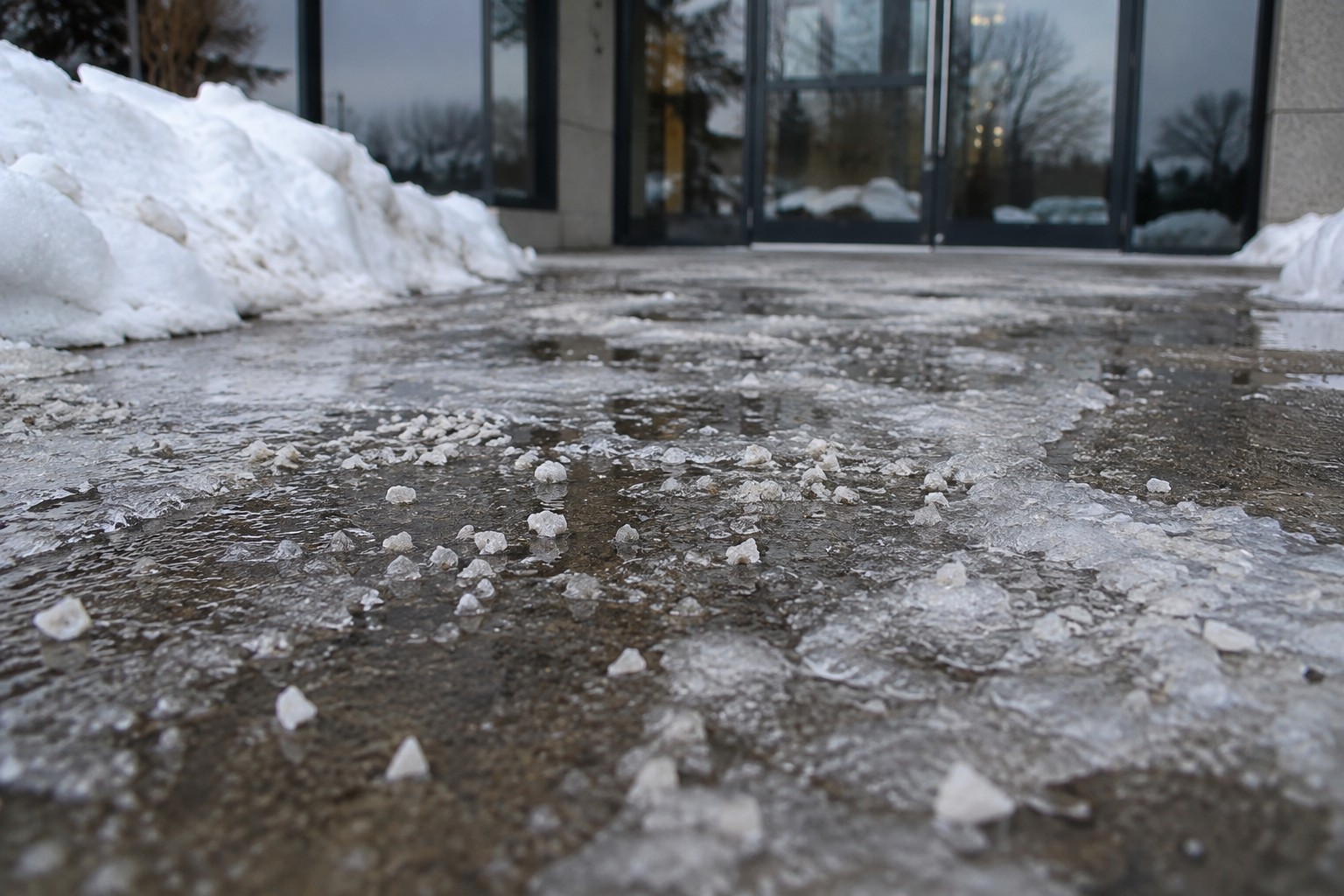
Entrances and accessible routes get priority treatment on a healthcare property.
This guide covers what commercial snow removal actually looks like for hospitals, clinics, medical office buildings across Minneapolis and the Twin Cities metro: what sets a healthcare property apart from a standard commercial site, what to look for in a contractor, and how to evaluate whether your current winter program meets the standard a medical facility needs.
What Makes Snow Removal Different for a Healthcare Property?
Three things often separate a hospital or clinic from a typical office building when it comes to winter service.
Traffic never stops. A corporate office empties out at 6 p.m. A hospital, urgent care, or 24-hour clinic does not. Ambulance bays, emergency entrances and overnight staff lots need to be clear and treated around the clock, not just during business hours.
The people on foot are often more vulnerable. Patients using canes, walkers or wheelchairs, people recovering from surgery, and elderly visitors cannot navigate an icy curb cut or a snow-packed accessible route the way an able-bodied office worker can. The margin for error on a walkway is smaller.
Emergency access cannot be blocked. Snow storage, plow staging and drift accumulation all have to stay clear of ambulance lanes, fire lanes and emergency entrances, every storm, without exception.
What Should a Healthcare Snow Removal Plan Cover?
A property-specific winter plan for a medical campus typically addresses the following areas, at a minimum, each with its own priority level and trigger:
Area
Why it matters on a healthcare property
Typical priority
Ambulance bays and emergency entrances
Must stay clear and treated at all times, regardless of time of day
Highest, often a standing zero-tolerance zone
Main entrance and accessible routes
Highest foot traffic from patients and visitors, including wheelchairs and mobility aids
High, cleared before other lot areas
Overnight and staff parking
Staff arriving and leaving on shift changes around the clock
High, tied to shift schedules rather than daytime hours
Patient drop-off and valet lanes
Short-term stops where a vehicle may be idling with a patient being assisted out
High
General visitor parking
Standard lot clearing and de-icing
Standard
Loading docks and service areas
Deliveries, including medical supply and pharmacy deliveries, continue through winter
Standard to high depending on the facility
How Should Accessible Routes Be Handled in Winter?
Accessible parking stalls, the access aisles next to them, and the path from those stalls to the building entrance need to be treated as their own category, cleared and de-iced before general lot work, not as an afterthought once the rest of the property is done. The same applies to curb ramps and any transition point where a wheelchair or walker crosses from pavement to sidewalk. These are the spots where a few inches of untouched snow or a thin sheet of ice creates substanial risk, and they are also the easiest to miss if a crew is working the lot in a standard sweep pattern rather than a priority sequence.
What Response Time Should a Hospital or Clinic Expect?
Response expectations on a healthcare campus are usually tighter than on a standard commercial property, because the building cannot simply wait until morning. A well-run winter program defines triggers in advance: what snowfall depth starts a plow pass, how quickly crews respond to an overnight event, and what happens during an active storm versus after it ends. For a facility with 24-hour operations, that plan should include overnight monitoring and a defined call-out procedure, not a one-size schedule built around a 9-to-5 building. Our guide to commercial snow plowing contracts covers how trigger depths and response windows are typically structured.
How Does Ice Management Differ on a Medical Campus?
Ice is the bigger risk for a healthcare property specifically because of who is walking across it. The same melt-and-refreeze cycles that affect any Twin Cities commercial site, shaded entry alcoves, roofline drip zones, low spots where meltwater collects, are more consequential here because the people crossing them include patients who cannot catch themselves if they slip. Pre-treatment ahead of a forecasted event matters more on a healthcare entrance than almost anywhere else, since it prevents the bond between ice and pavement from forming in the first place rather than reacting to it after the fact. A full breakdown of how pre-treatment and material selection work is in our commercial ice management guide.
Where Should Snow Be Stored on a Hospital or Clinic Property?
Snow storage planning matters more on a healthcare site because of what it can block. Piles need to stay clear of ambulance lanes and fire lane sight distances, away from accessible routes and entrances, and positioned so meltwater does not run back across a walkway the next sunny afternoon. A contractor who has walked the property in the fall and planned storage locations in advance avoids the scramble of relocating a pile mid-winter because it turned out to be blocking an emergency exit.
What Documentation Should a Healthcare Facility Require?
Liability exposure is higher on a healthcare campus, both because of the population on site and because hospitals and clinics are frequently audited on safety and accessibility. Timestamped, GPS-tracked service records, showing exactly when a lot was plowed, when walks were treated, and what material was applied, give facility management documentation to point to if a slip-and-fall claim comes up. Ask any prospective contractor whether they provide this level of record-keeping as a standard part of service, not an add-on.
Single-Site Clinic vs. Multi-Building Medical Campus
A standalone clinic or medical office building has simpler logistics than a hospital campus with multiple buildings, parking structures and a central plant. Larger campuses benefit from a single contractor who treats the whole property as one coordinated plan rather than several disconnected lots, so a plow sequence on one side of campus does not leave an entrance on the other side waiting. Multi-building healthcare systems with locations spread across the metro face the same coordination challenge as any other portfolio; our guide on vetting a snow removal vendor for a multi-site portfolio applies directly to a healthcare system managing several locations.
How Should a Facility Director Evaluate a Snow Removal Contractor for a Healthcare Property?
A few questions separate a contractor equipped for healthcare work from one that is not.
Can you commit to a 24-hour response, not just business-hours service? A healthcare property does not get to wait until the next business day.
How do you prioritize accessible routes and entrances over general lot clearing? You want a defined sequence, not a general assurance.
What happens at ambulance bays and emergency entrances during an active storm? These should be treated as a standing priority zone, not folded into the regular rotation.
What documentation do you provide after each event? Timestamped records matter more here than on a typical office property.
Do the same crews work the property through the season? Consistency matters on a site where staff and the contractor need to coordinate closely around sensitive areas.
How Does a Winter Plan for a Healthcare Property Change Across the Season?
The season is not one continuous condition, and a healthcare property's needs shift along with it.
Late October through November. Early frost and the first flurries bring black ice risk at entrances often times before properties think about winter service. A healthcare campus benefits from pre-season treatment protocols being locked in early, rather than waiting for the first real storm to test the plan.
December through February. The core of the season, with the heaviest plow volume and the coldest stretches, where material selection and crew responsiveness are tested most.
Late February through April. Melt and refreeze cycles accelerate, often producing more slip risk at entrances and ramps than the heaviest snow weeks of midwinter, since large piles release water onto walkways that then refreeze overnight.
A facility director who reviews the plan at each of these transitions, rather than assuming December's plan still fits in March, catches problems before they become incidents.
What Role Does the Rest of the Property Play in Winter Safety?
Snow and ice service does not operate in isolation from the rest of a healthcare property's grounds. Drainage issues identified during the warmer months, a catch basin that is not draining properly, a low spot in a parking area, or a downspout discharging across a walkway, tend to show up as recurring ice problems in the same location every winter. A facility that addresses drainage and surface issues in the fall, before the ground freezes, prevents a share of the ice complaints that would otherwise appear at that same spot all season. This is one of the practical arguments for working with a single contractor who handles snow and ice alongside concrete, asphalt and grounds maintenance, since a provider who sees the property across all four seasons is in a position to flag and fix the underlying cause rather than only treating the symptom every storm.
Staffing Continuity Matters More on a Healthcare Campus
A hospital or clinic security team, facilities staff and front desk personnel get used to working with a specific snow removal crew over a season, coordinating on where patients are being dropped off, where a wheelchair van needs a cleared path, or where a delivery truck is expected. A contractor that rotates subcontracted crews through the property loses that coordination every time the crew changes. Year-round, consistent crews carry that institutional knowledge of the site into the winter season instead of starting over with every storm.
Frequently Asked Questions
Do hospitals and clinics need a different snow removal contract than a standard office building?
The contract structure is similar, but the priorities and response expectations are usually stricter. Ambulance access, accessible routes and 24-hour coverage typically get written in as standing requirements rather than general service terms.
How quickly should a medical facility's parking lot be cleared after snowfall starts?
This depends on the specific agreement, but healthcare properties generally set tighter trigger depths and faster response windows than standard commercial sites, given continuous traffic and the vulnerability of the people walking the property.
Are accessible parking routes treated differently from the rest of the lot?
Yes. Accessible stalls, access aisles and the path to the entrance are typically treated and cleared as a priority zone ahead of general lot work, since these routes serve people using mobility aids who cannot navigate uncleared snow or ice the way other visitors can.
What happens if snow removal blocks an ambulance bay or fire lane?
A well-run plan treats these areas as zero-tolerance zones, with snow storage and staging planned in advance so piles never accumulate in or near emergency access points. This should be addressed in the site plan before the season starts, not improvised during a storm.
Does ice management matter more for a healthcare property than a standard office site?
The physical risk is the same type of ice, but the consequences are often higher given who is crossing it. Pre-treatment of entrances, ramps and accessible routes ahead of a forecasted event is especially important on a medical campus.
A Winter Plan Built for the Property You Actually Run
A healthcare campus needs a winter plan built around its real traffic patterns and risk points, not a generic commercial template. TCOS works with property managers and facility directors at medical office buildings, clinics and healthcare campuses across the Twin Cities metro to build a site-specific plan covering accessible routes, ambulance access, overnight coverage and documented service records. If your current winter program was not built with a healthcare property in mind, now is the time to review it before the season is underway. Contact TCOS to talk through a winter plan for your facility.